Math & business · Updated June 2026
How to Learn Linear Programming and Master the Simplex Method with AI Safely
Master linear programming constraints and Simplex Method table pivots using Socratic AI coaching to map objective functions, identify slack variables, and trace simplex iterations safely.

In operations research and applied mathematics, linear programming (LP) is a method to achieve the best outcome (such as maximum profit or lowest cost) in a mathematical model whose requirements are represented by linear relationships. A standard LP problem consists of an objective function to maximize or minimize, subject to a set of linear inequality or equality constraints. For two-variable problems, the optimal solution can be found geometrically at a corner point of the graphed feasible region. For larger problems, mathematicians use the Simplex Method—an iterative algebraic algorithm that systematically tests corner points by moving along the edges of the feasible region using matrix pivot operations on a simplex tableau.
Setting up systems of inequalities, introducing slack variables, and performing row reductions on a simplex table can be tedious and error-prone. To finish homework problems quickly, students often upload their LP systems to AI models and ask for the final optimal values. However, copying these matrix steps prevents you from developing the structural optimization and linear algebra skills required for fields like economics, engineering, data science, and business analytics. This guide outlines a safe, active-learning study workflow to use AI as a Socratic linear programming coach.
Step 1: Mapping Constraints and Feasible Regions Socraticly
Before running any algebraic algorithm, you must translate word problems into standard mathematical models. This involves defining decision variables, constructing the objective function, and writing out inequality constraints. A common mistake is writing constraints with incorrect inequality signs or missing the non-negativity constraints ($x_i \ge 0$).
Prompt the AI to check your mathematical formulation using this template:
I am translating an optimization word problem into a standard linear programming model. I want to define my decision variables, objective function, and constraint inequalities. Act as a Socratic operations research tutor. Do not write the model or solve it for me. Ask me to identify what I am trying to maximize or minimize, list the resource limitations, and describe how to write them as inequality equations. Evaluate my answers and guide me with hints.Step 2: Formulating the Standard Maximization Form
To solve an LP problem algebraically using the Simplex Method, the model must be converted into standard form. This requires converting inequality constraints into equality equations by adding non-negative slack variables ($s1, s2, \dots$). For example, a constraint like $2x1 + x2 \le 8$ becomes $2x1 + x2 + s1 = 8$, where $s1 \ge 0$.
Practice setting up slack variables Socraticly with this prompt:
I am converting inequality constraints into standard form equations by adding slack variables. Act as a Socratic applied mathematics coach. Do not write the equations. Ask me to explain the physical meaning of a slack variable, list how many slack variables I need to introduce for my system of constraints, and prompt me to write the final standard form system of equations. Evaluate my input step-by-step.Step 3: Tracing Simplex Tableau Pivots
The Simplex Method uses matrix operations on a structured table (tableau). During each iteration, you must select the entering variable (most negative indicator in the bottom row) and the departing variable (determined by the minimum ratio test of the right-hand side divided by positive entries in the pivot column). The intersection of the pivot column and row defines the pivot element, which you must reduce to $1$ while clearing all other entries in the column to $0$ using elementary row operations.
Verify your matrix pivots and table calculations Socraticly with this prompt:
I am performing the first iteration of the Simplex Method on a tableau. Act as a Socratic operations research coach. Do not perform the matrix calculations or identify the pivot for me. Ask me to describe how I select the entering variable, list the ratio values for the minimum ratio test to find the departing variable, and identify the coordinate of the pivot element. Evaluate my steps and guide me.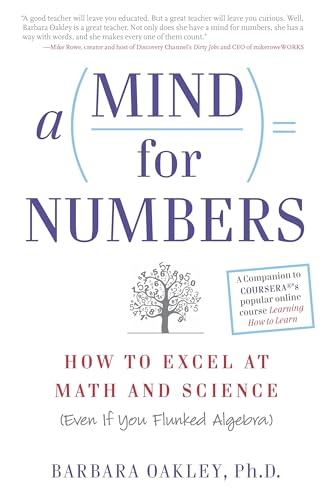
A Mind for Numbers: How to Excel at Math and Science
Dr. Barbara Oakley's actionable guide to unlocking analytical thinking. Perfect for students tackling STEM classes who want to beat procrastination and master complex formulas.
AI Study Pilot receives a small commission from qualifying Amazon purchases at no extra cost to you.Common mistakes
Keep these pitfalls in mind when studying linear programming:
- Forgetting the non-negativity constraint: In real-world optimization (like manufacturing or shipping), variables represent physical quantities, meaning they must be greater than or equal to zero ($x_i \ge 0$). Omitting this constraint in graphs or simplex tables causes mathematical failures.
- Selecting the wrong pivot row: When performing the minimum ratio test, you must divide the right-hand side values by the entries in the pivot column. You only compare positive entries in the pivot column. Dividing by zero or negative entries leads to incorrect pivots. Ask AI to check your logic: "Socraticly quiz me on how to perform the minimum ratio test in a simplex tableau when the pivot column contains negative values. Guide me."
- Assuming every LP problem has a single solution: LP problems can have multiple optimal solutions (if the objective function line is parallel to a constraint boundary), unbounded solutions (if the feasible region is open in the direction of optimization), or no feasible solution (if constraints do not overlap). AI models frequently hallucinate a single coordinate. Construct the graph or simplex table manually to identify boundary anomalies.
FAQ
- What is the difference between Simplex Method and graphical method? Graphical method works for only 2 variables. Simplex Method works for any number of variables using matrix algebra. Prompt: "Socraticly quiz me on the structural differences and limitations between graphing LP models and solving them via Simplex matrices. Guide me."
- How does the Duality Principle work in linear programming? Every maximization problem (primal) has a corresponding minimization problem (dual) that yields the same optimal value. Prompt: "Socraticly quiz me on how to construct the dual problem from a primal maximization tableau, and ask me to explain the economic interpretation of dual variables (shadow prices)."
- What is degeneracy in the Simplex Method? Degeneracy occurs when a basic variable becomes zero, which can lead to looping or cycling where the algorithm repeats tableau states without improving the objective value. Prompt: "Socraticly quiz me on what causes degeneracy in a simplex iteration and how Bland's rule prevents cycling. Guide me."
Final recommendation
Linear programming is a structured optimization technique. Do not rely on AI output calculators to solve your matrix table steps. Instead, sketch constraints and identify vertices on paper, perform row reductions systematically, and utilize Socratic AI checkpoints to audit your constraint definitions, standard form setups, and tableau pivots.
Disclosure: AI Study Pilot may add affiliate links later. We recommend free-first tools where possible and never promise guaranteed grades or outcomes.