Research workflow · Updated May 2026
How to Use AI for Scientific Literature Reviews: A Student Workflow
Learn how to use AI research assistants to find papers, map citations, and draft literature reviews without skipping source evaluation.
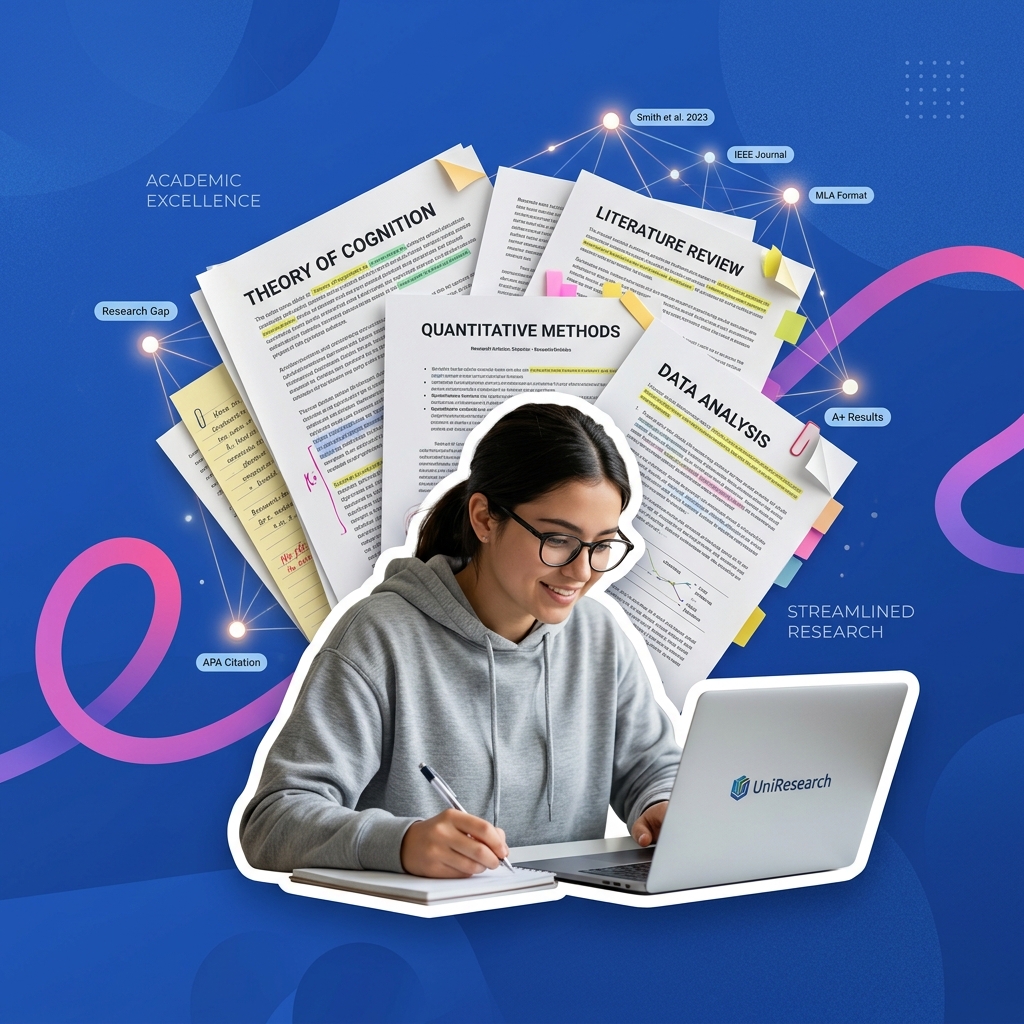
Writing a literature review is one of the most time-consuming parts of academic research. It requires searching databases, reading dozens of abstracts, mapping how papers reference each other, and synthesizing different findings into a coherent narrative.
AI research assistants like Consensus, Elicit, and Semantic Scholar have made it much easier to find relevant papers and extract summaries of their methods and results.
However, letting an AI write your literature review draft for you can lead to halluncinated citations, incorrect summaries of scientific data, and issues with academic integrity. To use AI safely, you must treat it as a research discovery assistant, not a writing replacement.
Scientific literature review workflow with AI
- Define a specific search question: Formulate a clear, answerable question rather than a broad topic search.
- Retrieve papers using AI search engines: Use tools like Consensus or Elicit to find papers and extract structured data columns (e.g., sample size, methodology, findings).
- Map the citation network: Use Connected Papers to visualize how key papers in your list are related.
- Draft summaries using source-grounded prompts: Ask the AI to compare findings across papers only using the text from the uploaded PDFs.
- Implement Deep Work sessions: Dedicate focused, distraction-free blocks of time to read key papers thoroughly and write the review yourself.
Time blocking and Deep Work for research
Deep academic research requires intense cognitive focus. You cannot write a high-quality literature review while constantly checking messages or multitasking.
Cal Newport's Deep Work framework teaches that to master complex cognitive tasks, you must isolate your mind from distractions and work in structured, deep-focus blocks. When doing literature reviews, set a timer for 50 or 90 minutes, close all unrelated tabs, and focus entirely on synthesis and writing. This produces significantly higher-quality analysis in less time.
Step 1 — Formulate your search query
Do not search for broad keywords like "climate change." Instead, ask a specific question that can be answered with scientific studies.
What is the effect of sleep deprivation on short-term memory recall in college-aged students?Using a question format allows search engines like Consensus to use semantic search to find papers that directly answer your query.
Step 2 — Extract structured data
Use Elicit to search for the papers. Once you have a list of 5-10 relevant studies, add custom columns to the Elicit table to extract:
* Population studied (e.g., sample size, age group).
* Intervention or variable analyzed.
* Main findings.
* Limitations of the study.
This lets you compare methodologies at a glance without reading all 10 full papers first.
Step 3 — Visualize the citation network
Find the "seminal" or most-cited paper in your list and paste its URL or DOI into Connected Papers.
This tool generates a visual graph showing related papers. The closer two nodes are on the map, the more citations they share. This helps you identify key foundational studies in that field that your search queries might have missed.
Step 4 — Extract comparisons using source-grounded prompts
Download the PDFs of the top 3-4 papers you identified. Upload them to a safe, private workspace like NotebookLM or a local AI chat.
Use this prompt to compare findings safely:
Using only the uploaded documents, compare the findings of [Paper A] and [Paper B] regarding [topic]. Outline any areas where the two studies agree, and any areas where their findings or methodologies conflict. Cite specific page numbers or sections for each point.This prevents the AI from making up information because it is forced to only pull facts from the documents you uploaded.
Common literature review mistakes to avoid
* Relying on abstract summaries alone: Abstracts do not tell the whole story. Before citing a paper, always read the methodology and discussion sections of the actual PDF to ensure the study is valid and relevant.
* Using AI for automated citation writing: Never let an AI write the final bibliographies or in-text citations. Use dedicated citation managers (like Zotero) to generate your bibliography in the correct style (APA, MLA, Chicago).
* Ignoring conflicting evidence: Do not build a literature review that only highlights papers supporting your thesis. Good scientific writing explores conflicting viewpoints and explains the differences in their study designs.
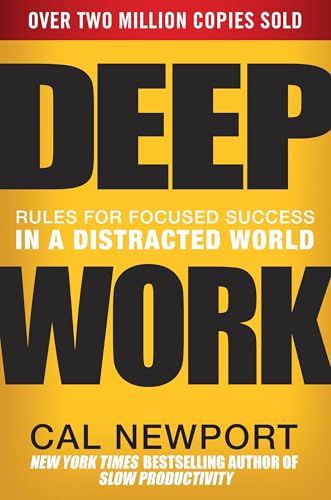
Deep Work: Rules for Focused Success in a Distracted World
Cal Newport's guide on cultivating intense, distraction-free concentration. Essential reading for students looking to master difficult subjects in less time.
AI Study Pilot receives a small commission from qualifying Amazon purchases at no extra cost to you.Disclosure: AI Study Pilot may add affiliate links later. We recommend free-first tools where possible and never promise guaranteed grades or outcomes.