Materials Science & Engineering · Updated June 2026
Learn Materials Science Crystal Structures with AI Safely
Master crystal lattices, atomic packing factors, and Miller indices derivation using Socratic AI coaching to build materials engineering intuition safely.

In materials science and solid-state physics, understanding the spatial arrangement of atoms within a solid is fundamental to predicting its mechanical, electrical, thermal, and optical properties. Most metals and ceramics exhibit a crystalline structure, meaning their atoms are arranged in a repeating, three-dimensional pattern known as a space lattice. The basic building block of this lattice is the unit cell—the smallest structural unit that retains the overall symmetry and geometry of the crystal.
The three most common metallic crystal structures are:
- Body-Centered Cubic (BCC): One atom at each of the eight corners, plus one complete atom at the center of the cube.
- Face-Centered Cubic (FCC): One atom at each of the eight corners, plus one atom centered on each of the six cube faces.
- Hexagonal Close-Packed (HCP): A hexagonal top and bottom plane containing seven atoms each (six at corners, one in center) with three atoms sandwiched in a middle plane.
Because visualizing 3D lattices, calculating atomic densities, and identifying crystallographic planes (using Miller indices) requires strong spatial reasoning, students frequently ask AI to draw planes, compute atomic packing factors, or solve crystallography homework. However, relying on AI to perform these calculations bypasses the visual-spatial modeling skills essential for engineering materials. This guide details a Socratic workflow to utilize AI as a crystallography tutor to master materials science concepts safely.
Step 1: Analyzing BCC, FCC, and HCP Geometries Socraticly
To analyze any crystal structure, engineers must relate the atomic radius (\(R\)) to the unit cell's edge length (\(a\)). For example:
- In a BCC unit cell, atoms touch along the body diagonal, yielding the relationship \(4R = a\sqrt{3}\).
- In an FCC unit cell, atoms touch along the face diagonal, yielding \(4R = a\sqrt{2}\).
These geometric relationships are critical for calculating the Atomic Packing Factor (APF)—the fraction of volume in a unit cell that is occupied by hard spheres:
\[\text{APF} = \frac{N_{\text{atoms}} \times V_{\text{atom}}}{V_{\text{unit cell}}}\]
Instead of asking AI to output these relationships directly, use it to prompt your geometric derivations.
Use this prompt to check your crystal structure geometry Socraticly:
I am studying metallic crystal structures (BCC, FCC, HCP). Act as a Socratic materials science tutor. Do not provide the formulas relating atomic radius R to unit cell parameter a, nor the APF calculations. Ask me to state the number of equivalent atoms per unit cell and identify which diagonal (face or body) atoms touch along for both FCC and BCC configurations. Guide me step-by-step.Step 2: Deriving Miller Indices for Planes and Directions Socraticly
Miller indices are a shorthand notation system in crystallography used to identify planes and directions within a lattice:
- Crystallographic Directions: Represented as \([uvw]\) using square brackets. It is a vector coordinates system originating at a chosen lattice point.
- Crystallographic Planes: Represented as \((hkl)\) in parentheses. To find the Miller indices of a plane, you determine its intercepts along the \(x\), \(y\), and \(z\) axes in terms of unit cell dimensions, take the reciprocals of these intercepts, and multiply by a common factor to obtain integers.
Using AI to index planes or draw vectors for you prevents you from developing the mental coordinate systems required to analyze diffraction patterns or slip systems.
Use this prompt to practice Miller indices derivation Socraticly:
I am deriving the Miller indices for a crystallographic plane that intersects the x-axis at 1/2, the y-axis at 1, and is parallel to the z-axis. Act as a Socratic crystallography coach. Do not write down the Miller indices or the reciprocal math. Walk me through the process: ask me to state the intercepts, take the reciprocals, clear fractional values, and represent the final plane using correct bracket notation. Guide me.Step 3: Computing Linear and Planar Density Socraticly
Different planes and directions in a crystal have different arrangements of atoms, which affects mechanical behaviors like slip (deformation). To quantify this, engineers calculate:
- Linear Density (LD): The fraction of line length in a direction that passes through atom centers: \(\text{LD} = \frac{\text{Number of diameters intersected}}{\text{Length of direction vector}}\).
- Planar Density (PD): The fraction of total plane area occupied by atoms (modeled as flat disks): \(\text{PD} = \frac{\text{Number of equivalent circles intersected}}{\text{Area of plane}}\).
High linear and planar density directions and planes form the slip systems along which dislocations move. Let AI audit your equivalent atom counts rather than calculating densities for you.
Use this prompt to check your planar density calculations Socraticly:
I am calculating the planar density of the (110) plane in a BCC crystal with lattice parameter a. Act as a Socratic materials science tutor. Do not calculate the area or equivalent atom count for me. Ask me to determine how many equivalent atoms lie on the (110) plane within the unit cell boundaries, and prompt me to express the area of the (110) plane in terms of a. Guide me.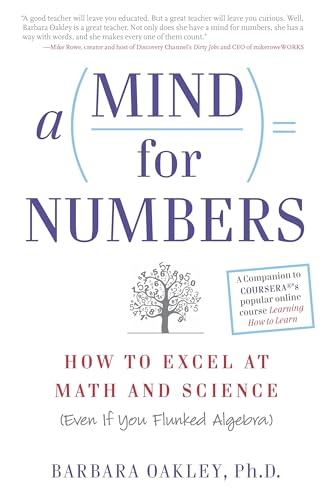
A Mind for Numbers: How to Excel at Math and Science
Dr. Barbara Oakley's actionable guide to unlocking analytical thinking. Perfect for students tackling STEM classes who want to beat procrastination and master complex formulas.
AI Study Pilot receives a small commission from qualifying Amazon purchases at no extra cost to you.Common mistakes
Keep an eye out for these classic pitfalls when studying materials science:
- Confusing notation brackets: Brackets represent distinct crystallographic features:
(hkl)is a single plane,{hkl}is a family of equivalent planes,[uvw]is a direction, and<uvw>is a family of equivalent directions. Mixing these up on exams is a highly common error. - Handling infinite intercepts: If a plane is parallel to an axis, it never intersects it (intercept is \(\infty\)). The reciprocal of infinity is \(0\), meaning the index for that coordinate is \(0\). Students often incorrectly set the index to \(1\) or think it is undefined.
- Failing to shift the origin: For directions or planes that pass through the origin \((0,0,0)\), you must shift the coordinate system origin to a neighboring unit cell node before calculating coordinates or intercepts. AI tools regularly fail to shift the origin when drawing or defining planes. Ask AI: "Quiz me Socraticly on when and how to shift the origin when defining crystal directions. Guide me."
FAQ
- Why is HCP not represented by simple three-digit Miller indices? HCP crystals have hexagonal symmetry, which is often represented using the Miller-Bravais four-index system \((hkil)\) where $i = -(h+k)$ to maintain symmetry indexing across equivalent planes. Prompt: "Socraticly quiz me on the relation between the three indices (h, k, l) and the four Miller-Bravais indices (h, k, i, l) for hexagonal structures. Guide me."
- What is the difference between coordination number and atomic packing factor? Coordination number is the number of nearest-neighbor atoms touching a given atom (e.g., 8 in BCC, 12 in FCC and HCP). Atomic packing factor is the volume ratio. Prompt: "Act as a Socratic tutor. Quiz me on why the coordination number of FCC is higher than BCC, and how that relates to their packing factors. Guide me."
- Why do slip systems matter in mechanical engineering? Plastic deformation occurs via dislocation glide along slip systems (which are the densest close-packed planes and directions). FCC metals (like copper and aluminum) are generally more ductile than BCC metals because they have more close-packed systems. Prompt: "Socraticly quiz me on how the difference in close-packed planes between FCC and BCC influences ductile-to-brittle transition temperatures. Guide me."
Final recommendation
Crystal structures and crystallographic planes form the foundation of materials engineering, phase diagrams, and mechanical deformation theory. Do not let AI draw your unit cells or compute your Miller indices. Instead, sketch your coordinate axes, determine intercepts on paper, count equivalent atoms carefully, and leverage Socratic AI sessions to audit your geometry and density formulas.
Disclosure: AI Study Pilot may add affiliate links later. We recommend free-first tools where possible and never promise guaranteed grades or outcomes.