Biology & pre-med · Updated June 2026
How to Learn Molecular Biology and Master DNA Transcription and Translation with AI Safely
Master molecular biology transcription and translation mechanisms using Socratic AI coaching to map promoter regions, RNA synthesis, and codon translation safely.
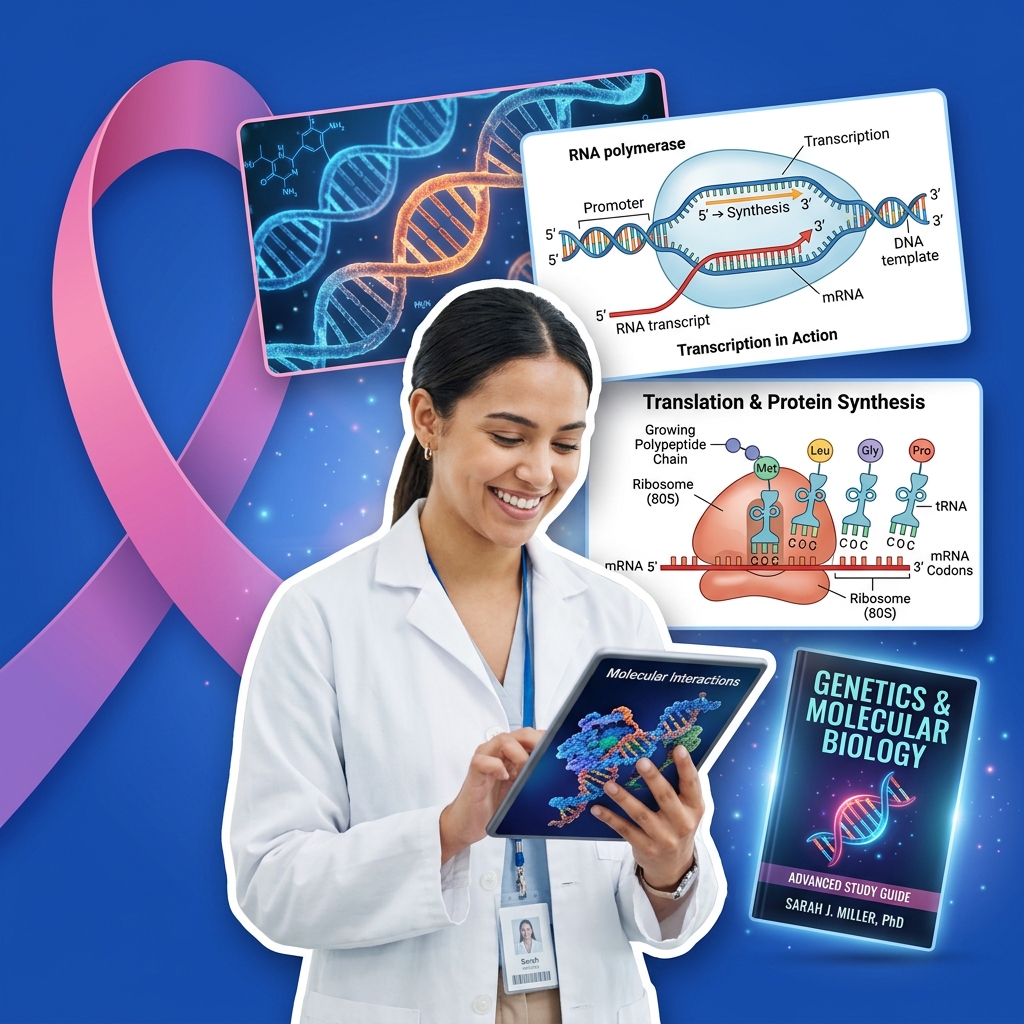
In molecular biology, the flow of genetic information—from DNA to RNA to protein—is the central dogma of life. This pathway consists of two main stages: transcription (where RNA polymerase reads a DNA template to synthesize mRNA) and translation (where ribosomes read the mRNA codons to build a polypeptide chain). Because these processes involve intricate molecular machinery, dozens of transcription factors, splicing operations (introns vs. exons), and tRNA codon-anticodon pairing rules, students often get overwhelmed by the raw volume of detail. To complete homework quickly, many copy sequences directly into AI models, asking them to generate the complementary RNA or list the translated amino acids.
However, copying sequences from AI models prevents you from building the structural mapping and decoding skills required for courses like molecular genetics and biochemistry, and for exams like the MCAT. Understanding the directional polarity of DNA (5' to 3') and how RNA is processed is crucial. This guide outlines a safe, active-learning study workflow to use AI as a Socratic molecular biology coach.
Step 1: Mapping the Transcription Bubble and Promoter Regions Socraticly
Transcription begins when RNA polymerase binds to a specific promoter region on the DNA (such as the TATA box in eukaryotes) and opens the double helix to form a transcription bubble. A common mistake is confusing the template strand (which is read 3' to 5' to synthesize RNA 5' to 3') with the coding strand. Instead of asking AI to transcribe the sequence for you, use it to check your directional setup.
Prompt the AI to check your transcription setup using this template:
I am practicing transcribing a DNA sequence. The coding strand of my DNA is 5'-ATG CGT ACC TGA-3'. Act as a Socratic molecular biology tutor. Do not write out the mRNA sequence or translate it. Ask me to identify the sequence of the template strand, state which direction (5' to 3' or 3' to 5') RNA polymerase reads the template strand, and explain how to write the final mRNA sequence. Evaluate my answers and guide me Socraticly.Step 2: Tracing Post-Transcriptional RNA Processing Socraticly
In eukaryotic cells, the primary transcript (pre-mRNA) must undergo processing before it leaves the nucleus: adding a 5' cap, a 3' poly-A tail, and splicing (where introns are removed and exons are joined). Students often struggle to explain why these steps are necessary or how alternative splicing allows a single gene to code for multiple proteins.
Practice checking RNA processing mechanics with this prompt:
I am studying eukaryotic pre-mRNA processing. I want to explain the difference between introns and exons and detail how the 5' cap and poly-A tail protect the mRNA. Act as a Socratic molecular biology coach. Do not write out the steps or summaries. Ask me questions about the specific functions of the 5' cap and poly-A tail during nuclear export, and prompt me to explain what alternative splicing does to the variety of proteins a cell can produce. Guide me.Step 3: Simulating Translation and Codon-to-tRNA Pairing Socraticly
Translation occurs in the ribosome, where tRNA molecules match their anticodons to mRNA codons to deliver specific amino acids. Identifying the start codon (AUG), shifting frames, and handling the "wobble hypothesis" (where the third base pair of the codon has flexible pairing rules) are frequent sources of confusion.
Check your translation steps using this prompt:
I have the mRNA sequence 5'-AUG CGU ACC UGA-3'. I want to translate this sequence into an amino acid chain using a codon wheel. Act as a Socratic translation coach. Do not translate the sequence or name the amino acids. Ask me to identify the start and stop codons, write the anticodon sequence for the first tRNA molecule, and explain what happens to the ribosome when it encounters the stop codon. Guide me Socraticly with hints.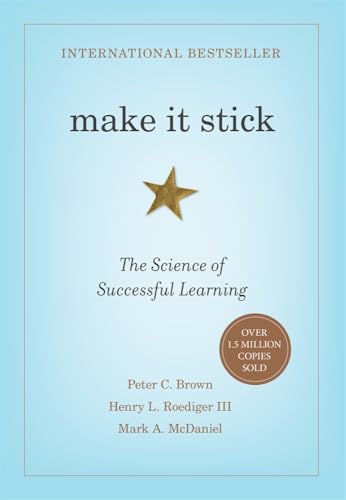
Make It Stick: The Science of Successful Learning
The gold standard for cognitive science learning. Learn how active recall, spaced repetition, retrieval practice, and varied study schedules dramatically improve retention over passive re-reading.
AI Study Pilot receives a small commission from qualifying Amazon purchases at no extra cost to you.Common mistakes
Keep these pitfalls in mind when using AI for molecular biology:
- Confusing coding and template strands: AI models frequently transcribe the coding strand directly (changing T to U) without verifying if the user input is coding or template. Always specify your strand polarity in Socratic prompts.
- Losing track of directional polarity: RNA is synthesized from 5' to 3', which means it must align anti-parallel to the template DNA (which runs 3' to 5'). AI tools often mix up the 5' and 3' ends when writing sequence complements. Verify your directions manually.
- Neglecting post-translational modifications: Translation builds the polypeptide, but proteins often require folding (by chaperones) or modifications (like phosphorylation or glycosylation) to become active. Prompt AI: "Quiz me Socraticly on the difference between translation and post-translational modification, and ask me to name three modifications that happen in the endoplasmic reticulum. Guide me with hints."
FAQ
- How can I use AI to study the wobble hypothesis? The wobble hypothesis explains why there are only ~45 types of tRNA for 61 codons. Ask the AI: "Walk me Socraticly through the base-pairing rules at the third codon position. Ask me to identify which bases can pair with Uracil at the wobble position."
- Can AI help me map transcription factors? Yes. Transcription factors bind to enhancers and promoters to regulate gene expression. Prompt: "Socraticly quiz me on how enhancers located thousands of base pairs away from a promoter can influence transcription rate. Ask me about DNA looping."
- How do I verify codon mutations with AI? Prompt AI: "I am studying how a single nucleotide substitution affects translation. Do not state the mutation type. Ask me to compare a silent, missense, and nonsense mutation conceptually, and guide me."
Final recommendation
Molecular biology mechanisms are spatial and chemical. Draw transcription bubbles clearly on paper, use codon tables to decode sequences manually, map tRNA movements through the A, P, and E sites of the ribosome, and use Socratic AI checkpoints to audit your strand polarities, splicing junctions, and reading frames.
Disclosure: AI Study Pilot may add affiliate links later. We recommend free-first tools where possible and never promise guaranteed grades or outcomes.