Mathematics & computer science · Updated June 2026
Learn Numerical Analysis & Root-Finding Algorithms with AI Safely
Master numerical analysis root-finding algorithms, bisection method calculations, and Newton-Raphson derivations using Socratic AI coaching to build mathematical intuition safely.

In computational mathematics, computer science, and engineering, numerical analysis is the study of algorithms that use numerical approximation for the problems of mathematical analysis. One of the most basic problems in numerical analysis is root-finding: determining the values of \(x\) for which a continuous function \(f(x)\) equals zero ($f(x) = 0$). Because analytical solutions (exact algebraic formulas) are often impossible to obtain for transcendental equations like \(e^{-x} - \sin(x) = 0\), engineers rely on iterative numerical methods. These algorithms start with an initial guess and repeatedly refine it until the solution converges within a desired tolerance.
Because performing manual iterations of these algorithms is computationally repetitive and error-prone, students frequently ask AI to write their Python code, solve their exam sets, or perform Newton-Raphson iterations. While utilizing code to automate large systems is proper, letting AI calculate your initial iterations or select step sizes bypasses the mathematical intuition needed to understand algorithm stability, convergence criteria, and potential failure modes. This guide outlines a Socratic workflow to utilize AI as a numerical methods tutor to build computational and mathematical intuition safely.
Step 1: Understanding Bracket-Based Convergence via the Bisection Method Socraticly
The Bisection Method is a reliable, bracket-based root-finding algorithm based on the Intermediate Value Theorem. If a continuous function \(f(x)\) changes sign over an interval $[a, b]$—meaning \(f(a) \cdot f(b) < 0\)—then at least one root must exist within that interval. The algorithm repeatedly bisects the interval, setting the midpoint \(c = \frac{a+b}{2}\), evaluating \(f(c)\), and replacing either \(a\) or \(b\) to bracket the root. While simple, using AI to perform these iterations prevents you from visualizing how the search interval is halved at each step.
Use this prompt to check your bisection calculations Socraticly:
I am using the bisection method to find the root of f(x) = x^3 - x - 2 over the initial interval [1, 2] with a tolerance of 0.1. Act as a Socratic numerical analysis tutor. Do not perform the calculations or write down the iterations. Ask me to verify that a root exists in [1, 2] first, prompt me to calculate the first midpoint c1, and have me explain how to determine which subinterval to keep for the next iteration. Guide me.Step 2: Mastering Open Root-Finding with the Newton-Raphson Method Socraticly
Unlike bracketed methods, the Newton-Raphson Method is an open method that requires only a single initial guess, \(x_0\). It uses the tangent line of the function \(f(x)\) at \(x_n\) to project down to the x-axis, solving for the next estimate \(x_{n+1}\):
\[x_{n+1} = x_n - \frac{f(x_n)}{f'(x_n)}\]
This method converges quadratically (very rapidly) when close to the root, but it can fail or diverge if \(f'(x_n) \approx 0\) or if the initial guess is far from the root. Instead of asking AI to solve the recurrence relation for you, use it to check your derivative setup and convergence logic.
Use this prompt to master Newton-Raphson Socraticly:
I am applying the Newton-Raphson method to locate the root of f(x) = cos(x) - x with an initial guess x0 = 0.5. Act as a Socratic computational math coach. Do not perform the iterations or write the numerical values. Ask me to find the derivative f'(x) first, guide me through setting up the recurrence formula for x1, and prompt me to explain what conditions could cause this method to fail or diverge. Guide me.Step 3: Evaluating the Secant Method & Algorithm Convergence Socraticly
A major drawback of Newton-Raphson is the requirement to calculate the derivative \(f'(x)\) analytically, which can be difficult or impossible for some complex systems. The Secant Method resolves this by approximating the derivative using the secant line through two consecutive points, \(x_{n-1}\) and \(x_n\):
\[x_{n+1} = x_n - f(x_n) \frac{x_n - x_{n-1}}{f(x_n) - f(x_{n-1})}\]
This method requires two initial guesses but converges faster than bisection (superlinearly, with a rate of \(\approx 1.618\)) without needing derivatives. Using AI to run these iterations prevents you from analyzing how numerical stability is affected when \(f(x_n) \approx f(x_{n-1})\).
Use this prompt to study the secant method Socraticly:
I am comparing the Newton-Raphson and Secant methods. Act as a Socratic numerical methods tutor. Do not write code or solve the equations. Ask me to explain how the Secant method approximates the derivative geometrically, prompt me to compare the convergence rates of Bisection, Secant, and Newton-Raphson, and ask me what numerical issues arise in the Secant method denominator if the roots are very close. Guide me.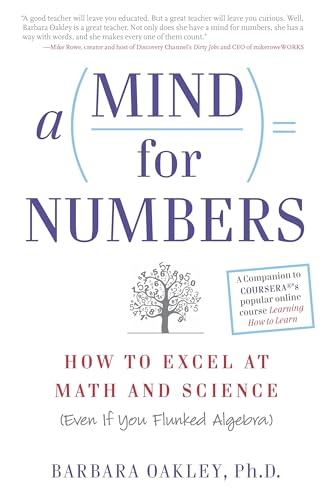
A Mind for Numbers: How to Excel at Math and Science
Dr. Barbara Oakley's actionable guide to unlocking analytical thinking. Perfect for students tackling STEM classes who want to beat procrastination and master complex formulas.
AI Study Pilot receives a small commission from qualifying Amazon purchases at no extra cost to you.Common mistakes
Keep an eye out for these classic pitfalls when studying root-finding algorithms:
- Diverging due to horizontal tangents: If your guess \(x_n\) lands near a local maximum or minimum, the derivative \(f'(x_n)\) is near zero, which makes the term \(\frac{f(x_n)}{f'(x_n)}\) explode, shooting the next guess \(x_{n+1}\) far away from the root. Ask AI: "Quiz me Socraticly on the geometrical failure modes of the Newton-Raphson method (such as inflection points, local extrema, and cycles). Guide me."
- Forgetting absolute vs. relative error: When stopping an iterative method, confusing absolute error \(|x_{n+1} - x_n| < \epsilon\) and relative error \(|\frac{x_{n+1} - x_n}{x_{n+1}}| < \epsilon\) can lead to premature stopping, especially if the root is very small or very large.
- Root-jumping in multi-root equations: In equations with multiple roots, starting with an initial guess that is not close enough to your target root can cause the algorithm to jump to a completely different root. Use AI to study this: "Prompt me Socraticly to explain how the choice of initial guess dictates which root a multi-root transcendental equation converges to. Guide me."
FAQ
- What is the difference between bracketed and open methods? Bracketed methods (like Bisection and Regula Falsi) require two initial guesses that bracket the root and are guaranteed to converge, although slowly. Open methods (like Newton-Raphson and Secant) require one or two guesses that do not need to bracket the root; they converge much faster but are not guaranteed to converge. Prompt: "Socraticly quiz me on the trade-offs between guaranteed convergence and convergence speed in numerical root-finding. Guide me."
- Why does Newton-Raphson have quadratic convergence? Under Taylor series expansion, the error at step \(n+1\) is proportional to the square of the error at step \(n\): \(e_{n+1} \approx C e_n^2\). This means the number of correct decimal places roughly doubles with each iteration when close to the root. Prompt: "Act as a Socratic tutor. Quiz me on how the Taylor series derivation of the Newton-Raphson method reveals its quadratic convergence rate. Guide me."
- What is the stopping criterion in numerical algorithms? The iterations are terminated when the approximate error falls below a specified tolerance \(\epsilon\), or when the maximum number of iterations is reached. Evaluating \(|f(x_{n+1})| < \epsilon\) is also used to verify that the value is close to zero. Prompt: "Socraticly quiz me on how to choose a robust stopping criterion when finding roots of ill-conditioned functions. Guide me."
Final recommendation
Numerical analysis is about approximating solutions with controlled accuracy. Do not let AI run your iterations or code your loops from the start. Instead, write down the recurrence relationships, solve the first few iterations by hand using a calculator, analyze potential failure modes, and leverage Socratic AI sessions to audit your arithmetic and check your convergence criteria.
Disclosure: AI Study Pilot may add affiliate links later. We recommend free-first tools where possible and never promise guaranteed grades or outcomes.