Health science · Updated June 2026
How to Solve Nursing Dosage Calculations and Practice Clinical Math With AI Safely
Learn how to use AI safely to practice dimensional analysis, double-check unit conversions, and master nursing clinical math with step-by-step Socratic hints.

In nursing school, clinical math and dosage calculation exams are high-stakes. Many programs require students to pass these exams with a perfect 100% score to participate in clinical rotations. A single misplaced decimal point or conversion error in the real world can result in a critical medication error.
Because dosage calculation is arithmetic-heavy, the temptation to use AI to solve homework questions is high. However, relying on AI to compute dosage answers for you is dangerous. You must be able to perform these calculations quickly and accurately under exam conditions and at the bedside.
Instead, structure AI as a Socratic clinical math tutor to help you master dimensional analysis, verify your step-by-step calculations, and generate timed practice quizzes safely.
A Safe Clinical Math Study Workflow
Master dosage calculations with this three-step study workflow:
1. Dimensional Analysis Verification
Dimensional analysis is the standard method for setting up dosage calculations. Do not ask AI to "solve this dosage problem." Instead, write out your setup on paper, showing your conversion factors and units. Ask the AI to review your formula setup without giving the final number, checking if your units cancel out correctly.
2. Double-Checking Unit Conversions
Dosage math frequently requires converting between metric units (e.g., micrograms to milligrams) or household units (e.g., pounds to kilograms). Use the AI to check your conversion factors, particularly weight conversions (dividing pounds by 2.2 to get kilograms), which must be rounded properly according to clinical rules.
3. Timed Practice and Retrieval
Dosage exams are timed, and math anxiety can slow you down. Use AI to generate mock quizzes with standard nursing math question types (e.g., pediatric weight-based dosing, IV drip rates, reconstituted powder dosages). Solve them under timed conditions using a physical Pomodoro timer or visual study timer to build speed.
---
Clinical Math Prompts You Can Copy
Socratic Drip Rate Tutor
I am practicing IV drip rate calculations. Here is a problem: [Insert Problem, e.g., "An IV of 1,000 mL D5W is to infuse over 8 hours. The drop factor is 15 gtt/mL. Calculate the flow rate in gtt/min"]. Act as a Socratic nursing tutor. Review my calculation steps: [Paste Your Steps]. Do not tell me the correct answer; just point out if I set up the fraction incorrectly or used the wrong conversion factor.Pediatric Weight-Based Dosing Reviewer
I am practicing pediatric dosing. Here is my setup: [Paste Your Work, e.g., converting 44 lbs to kg, multiplying by 5mg/kg/day, and dividing by 3 doses]. Act as a clinical math reviewer. Check my rounding (especially the kg conversion) and let me know if my math aligns with safe nursing practice. Do not provide the final answer, just the feedback on my logic.Practice Quiz Generator
Generate a 5-question nursing dosage calculation quiz. Include one question on unit conversion, one on oral liquid medication, one on reconstituted powder, one on IV hourly flow rate (mL/hr), and one on pediatric weight-based dosing. Do not show the answers. I will solve them and paste my work for you to check.---
Common Clinical Math Mistakes to Avoid
* Decimals and Leading Zeros: Always write a leading zero before a decimal point (e.g., 0.5 mg, not .5 mg) and never write a trailing zero (e.g., 5 mg, not 5.0 mg) to prevent dosing errors. AI models sometimes ignore these safety standards; you must enforce them.
* Rounding Errors Too Early: Rounding too early in weight conversions or multi-step equations can lead to an incorrect final dosage. Always carry calculations out to at least three decimal places and round only at the very end.
* Trusting AI Math Blindly: Large Language Models are notoriously prone to arithmetic errors. Never trust an AI's final calculated number without solving it yourself. Use the AI for logical setup verification, not computation.
---
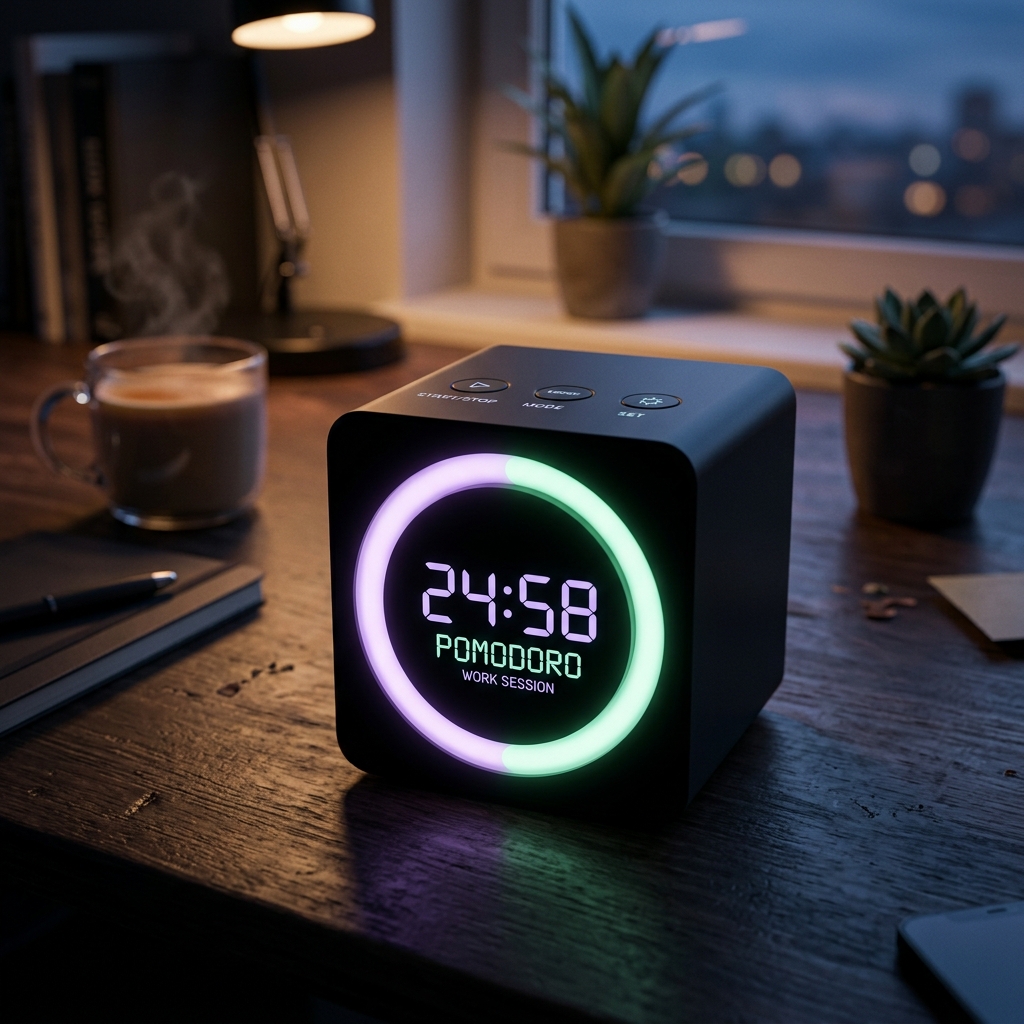
Visual Pomodoro Study Cube Timer
A physical, gravity-sensing study block timer that triggers timed active recall intervals automatically. Perfect for staying locked in during focused sprints.
AI Study Pilot receives a small commission from qualifying Amazon purchases at no extra cost to you.FAQ
Why does my school require a 100% on the dosage exam?
Medication administration is one of the most critical safety responsibilities of a nurse. A 10% error in math can represent a tenfold overdose or underdose, which can be fatal. The 100% threshold ensures absolute safety.
How do I calculate IV flow rates when no drop factor is given?
If the rate is in mL/hr, it is programmed into an electronic infusion pump, so no drop factor is needed. If it is infusing by gravity, you must know the drop factor of the tubing (macrodrip or microdrip) to calculate drops per minute (gtt/min).
Can AI help me learn the formulas?
Yes, you can ask AI to explain the Difference between the "Desired Over Have" formula and Dimensional Analysis to see which method fits your learning style best.
Disclosure: AI Study Pilot may add affiliate links later. We recommend free-first tools where possible and never promise guaranteed grades or outcomes.