Medicine & nursing · Updated June 2026
Learn Pathophysiology & Disease Mapping with AI Safely
Master complex disease mechanisms, cellular adaptations, and clinical manifestations using Socratic AI coaching to map pathophysiology pathways and organize nursing study guides safely.
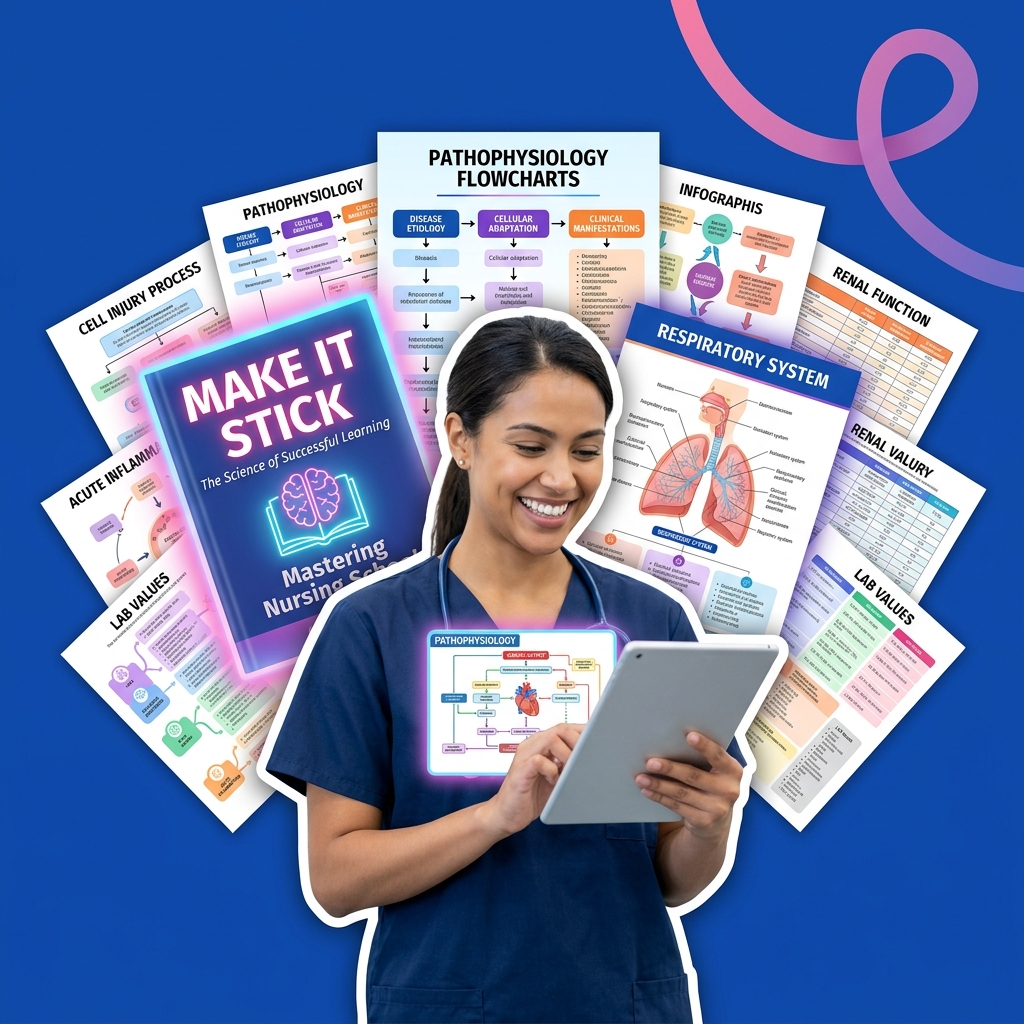
In nursing, medicine, and allied health programs, pathophysiology is the bridge between basic anatomy/physiology and clinical practice. It is the study of how disease processes disrupt normal bodily functions. To succeed in clinical rotations and pass licensure exams like the NCLEX, students must master "disease mapping"—the process of linking a disease's etiology (root cause) to its pathogenesis (cellular and tissue-level development), clinical manifestations (signs and symptoms), and potential complications. Because human biology is interconnected, a single cellular malfunction can trigger a cascade of compensatory mechanisms across multiple organ systems.
Because disease maps are highly visual and biochemically complex, students often feel overwhelmed by the sheer volume of information. It is tempting to upload lecture slides to an AI and ask it to output a complete disease map or summary tables. However, reading a pre-made table bypasses the active retrieval and conceptual synthesis required to spot critical patient changes in a high-stress hospital environment. This guide outlines a safe, active-learning study workflow to use AI as a Socratic pathophysiology coach to build diagnostic clinical intuition.
Step 1: Mapping Pathogenesis Socraticly
Pathogenesis is the step-by-step physiological progression of a disease. For example, in Type 2 Diabetes, the pathway involves genetic/lifestyle factors leading to insulin resistance, beta-cell dysfunction, impaired glucose uptake, and chronic hyperglycemia. Rather than letting AI draw the flow chart for you, write out your explanation of the pathway first and use AI to audit your logic and test for missing physiological links.
Use this prompt to check your pathogenesis logic Socraticly:
I am drafting a pathophysiology map for chronic heart failure. I want to explain my understanding of how decreased cardiac output triggers the renin-angiotensin-aldosterone system (RAAS) and how that ultimately worsens heart failure over time. Act as a Socratic clinical instructor. Do not write out the pathway or draw a diagram for me. Ask me to list the hormones involved in order, explain their effect on blood volume and vasoconstriction, and question me on how these compensatory mechanisms eventually damage the heart muscle. Guide me.Step 2: Linking Symptoms to Cellular Changes
Rote memorization of symptoms (e.g., memorizing that asthma causes wheezing and dyspnea) is fragile. In clinical exams, you must explain why these symptoms occur at the tissue level (e.g., histamine release from mast cells causes bronchiolar smooth muscle constriction, mucosal edema, and mucus hypersecretion, which narrows airways and creates high-velocity turbulent airflow). Use AI to challenge you to explain the cellular "why" behind every clinical sign.
Practice correlating symptoms to pathology Socraticly with this prompt:
I am studying the pathophysiology of acute kidney injury (AKI), specifically intrarenal failure caused by acute tubular necrosis (ATN). I want to explain why a patient presents with oliguria (low urine output) and metabolic acidosis. Act as a Socratic nursing tutor. Do not list the symptoms or explain the mechanisms. Ask me to explain what happens to the tubular epithelial cells, how debris blocks the nephron lumen, and how this impairment affects the kidney's ability to excrete hydrogen ions and reabsorb bicarbonate. Guide me.Step 3: Differentiating Similar Conditions
A common source of errors on clinical exams is confusing similar pathophysiological processes (e.g., differentiating between DKA and HHS, or distinguishing rheumatoid arthritis from osteoarthritis). To build clear mental boundaries, use AI to compare and contrast conditions using physiological benchmarks rather than superficial symptom lists.
Audit your comparative understanding Socraticly using this prompt:
I am comparing Type I Hypersensitivity (IgE-mediated) and Type IV Hypersensitivity (cell-mediated). Act as a Socratic immunology coach. Do not write a comparison chart or define the types. Ask me to identify the primary immune cells involved in each reaction, compare the timeline of the response after exposure, and evaluate my comparison. Guide me step-by-step.
Make It Stick: The Science of Successful Learning
The gold standard for cognitive science learning. Learn how active recall, spaced repetition, retrieval practice, and varied study schedules dramatically improve retention over passive re-reading.
AI Study Pilot receives a small commission from qualifying Amazon purchases at no extra cost to you.Common mistakes
Watch out for these common study pitfalls:
- Studying symptoms in isolation: Memorizing lists of symptoms without linking them to the cellular disruption makes it impossible to solve clinical case studies. AI tools are prone to listing symptoms alphabetically rather than linking them physiologically.
- Overlooking compensatory mechanisms: The body always attempts to restore homeostasis (e.g., using tachycardia to compensate for blood loss). You must learn to distinguish between the primary pathology (the injury) and the body's reaction to it (the compensation).
- Ignoring cellular adaptations: Diseases always begin at the cellular level. Make sure you understand the difference between hypertrophy, hyperplasia, metaplasia, and dysplasia before analyzing organ-specific diseases.
FAQ
- What is the difference between signs and symptoms? Signs are objective, measurable findings observed by a clinician (e.g., blood pressure, heart rate, lab values). Symptoms are subjective reports felt by the patient (e.g., pain, nausea, fatigue). Prompt: "Socraticly quiz me on how to classify clinical findings from a case study into objective signs and subjective symptoms, and ask me to explain the physiological cause of one of each."
- Why does chronic inflammation lead to cancer? Chronic inflammation causes continuous cell injury, leading to rapid cell division (hyperplasia) to replace damaged tissue. This increases the probability of genetic mutations, while inflammatory cytokines promote angiogenesis and cell survival. Prompt: "Socraticly guide me through the link between chronic tissue irritation, cellular metaplasia, and neoplastic transformation."
- What is the role of oncotic pressure in edema? Edema occurs when fluid shifts from the blood vessels to the interstitial space. This is regulated by hydrostatic pressure (pushing fluid out) and plasma oncotic pressure (maintained by albumin, pulling fluid in). Prompt: "Socraticly quiz me on how liver failure leads to hypoalbuminemia and generalized edema. Ask me to explain the forces involved in Starling's law of capillaries."
Final recommendation
Pathophysiology requires system-level thinking. Do not rely on AI summaries or pre-built tables to memorize disease profiles. Instead, trace your etiologies to cellular adaptations on paper, link tissue damage directly to patient symptoms, and utilize Socratic AI checkpoints to audit your disease pathways, feedback loops, and compensatory mechanisms.
Disclosure: AI Study Pilot may add affiliate links later. We recommend free-first tools where possible and never promise guaranteed grades or outcomes.