Health science · Updated June 2026
How to Learn Pharmacology and Memorize Drug Classes With AI Safely
Learn how to use AI safely to master pharmacology drug classes, understand mechanisms of action, and practice NCLEX-style application drills.
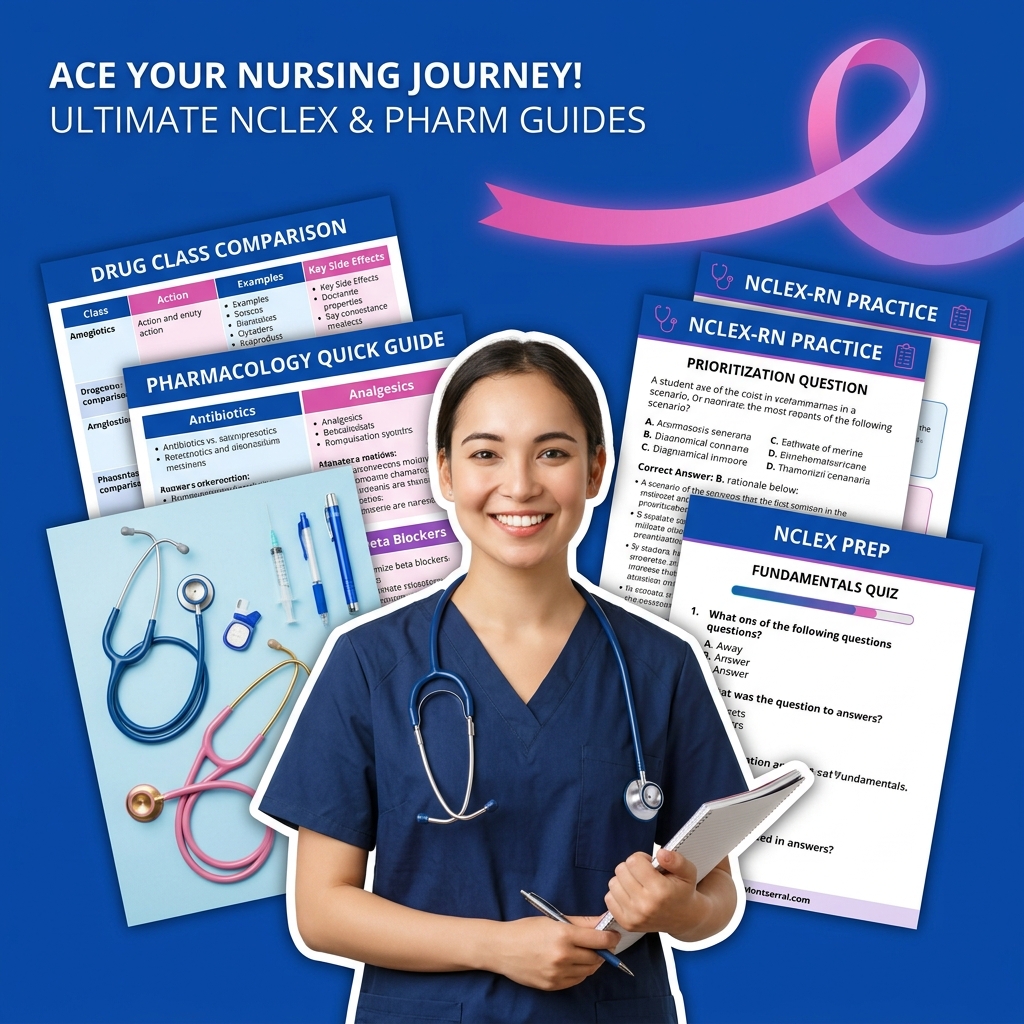
Pharmacology is widely considered the most difficult and stressful course in nursing school and pre-health programs. To pass, you must memorize hundreds of medications—including their generic and brand names, mechanisms of action, primary indications, critical side effects, contraindications, and nursing interventions.
Passive studying, such as reading through drug cards or highlighting handouts, is a recipe for cognitive overload. When faced with an exam containing complex patient scenarios, passive familiarity will not help you identify which patient is displaying a life-threatening adverse reaction.
AI assistants can act as interactive pharmacology coaches. You can use an AI to group medications by their generic suffixes, explain mechanisms of action using simple analogies, create memorable clinical mnemonics, and generate NCLEX-style practice questions to test your clinical reasoning.
However, copying medication worksheets or using AI to write clinical care plans is a violation of academic integrity. The key is to use the AI to generate active recall practice drills and conceptual summaries, while doing the memorization and clinical application work yourself.
Conceptual pharmacology workflow with AI
- Group by class and suffix: Master the common endings of generic drug names (e.g., "-olol" for beta blockers) rather than memorizing individual drugs.
- Deconstruct the physiological mechanism: Learn how the drug interacts with receptors conceptually before memorizing symptoms.
- Practice clinical retrieval: Quiz yourself on indications, adverse effects, and nursing assessments from memory.
- Solve NCLEX-style application questions: Practice applying your knowledge to realistic patient care scenarios.
Spaced Repetition in Medical Memorization
Nursing pharmacology is a prime example of a curriculum where cramming is mathematically impossible. The sheer volume of facts requires a structured, scientific approach to memorization.
In Make It Stick: The Science of Successful Learning, cognitive science researchers explain that spacing out your retrieval practice over time allows your brain to consolidate information, leading to durable memory.
To study drug classes effectively, use an AI assistant to generate flashcard prompts. Challenge yourself to recall the mechanism of action, key side effects, and critical nursing assessments for a specific drug class from memory. Draw a visual pathway of how the drug affects the target organ. By forcing your brain to retrieve these facts over multiple days (rather than re-reading the charts), you build the strong neural connections needed to recall drug actions instantly in a high-stakes clinical setting.
The Drug Class Review Prompt
To break down a specific class of medications and create clinical active recall drills, use this prompt:
Act as a nursing pharmacology instructor. Explain the drug class [insert drug class, e.g., ACE Inhibitors] conceptually.

Please generate a study guide:
1. List the common generic suffix, chemical category, and 3 prototype drugs.
2. Explain the mechanism of action in plain, conceptual language (what it does to the body).
3. Identify the primary clinical indications and 3 critical adverse effects to monitor (highlighting life-threatening reactions).
4. Share a creative clinical mnemonic to memorize this class.
5. Generate one NCLEX-style multiple-choice question where a nurse must make a clinical decision regarding a patient taking this drug. Do not show the answer or rationale immediately.
Step-by-Step Pharmacology Review
Step 1 — Tracing suffixes
Identifying generic suffixes is the fastest way to categorize new drugs. Ask the AI:
Provide a table of the 10 most common generic drug suffixes in cardiovascular pharmacology, their corresponding drug classes, and their primary mechanisms of action.Step 2 — Compare overlapping classes
Exams frequently test your ability to differentiate between similar drug classes. Ask the AI:
Compare Beta-1 selective blockers and non-selective beta blockers. What are the key differences in their mechanisms of action, and why is non-selectivity a critical contraindication for patients with asthma?Step 3 — Run an NCLEX prioritization quiz
Prioritization questions (identifying which patient to see first) are a hallmark of nursing exams. Prompt the AI:
Act as an NCLEX tutor. Describe a scenario where a nurse has 3 patients taking different medications: [insert drugs, e.g., digoxin, warfarin, and furosemide]. Provide a multiple-choice question asking which patient displays the most critical sign of toxicity. Provide a hidden spoiler key with the correct answer and rationale.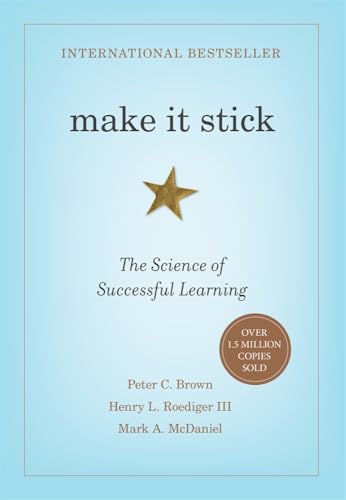
Make It Stick: The Science of Successful Learning
The gold standard for cognitive science learning. Learn how active recall, spaced repetition, retrieval practice, and varied study schedules dramatically improve retention over passive re-reading.
AI Study Pilot receives a small commission from qualifying Amazon purchases at no extra cost to you.Common mistakes
* Memorizing brand names instead of generic names: Licensing exams like the NCLEX only use generic names. Use AI to drill yourself using generic names exclusively.
* Memorizing side effects in isolation: Connect side effects directly to the drug's mechanism of action (e.g., beta blockers slow heart rate, so a major side effect is bradycardia). This conceptual linking prevents rote-memorization failure.
Skipping nursing assessments: Never focus solely on what the drug does; always study what the nurse must do* (e.g., checking apical pulse for 60 seconds before administering digoxin). Use AI to practice prioritizing assessments.
Disclosure: AI Study Pilot may add affiliate links later. We recommend free-first tools where possible and never promise guaranteed grades or outcomes.