Social science · Updated June 2026
How to Analyze Psychology Case Studies and Learn Cognitive Theories With AI Safely
Learn how to use AI safely to master clinical psychology case studies, analyze patient vignettes, and study cognitive theories conceptually.
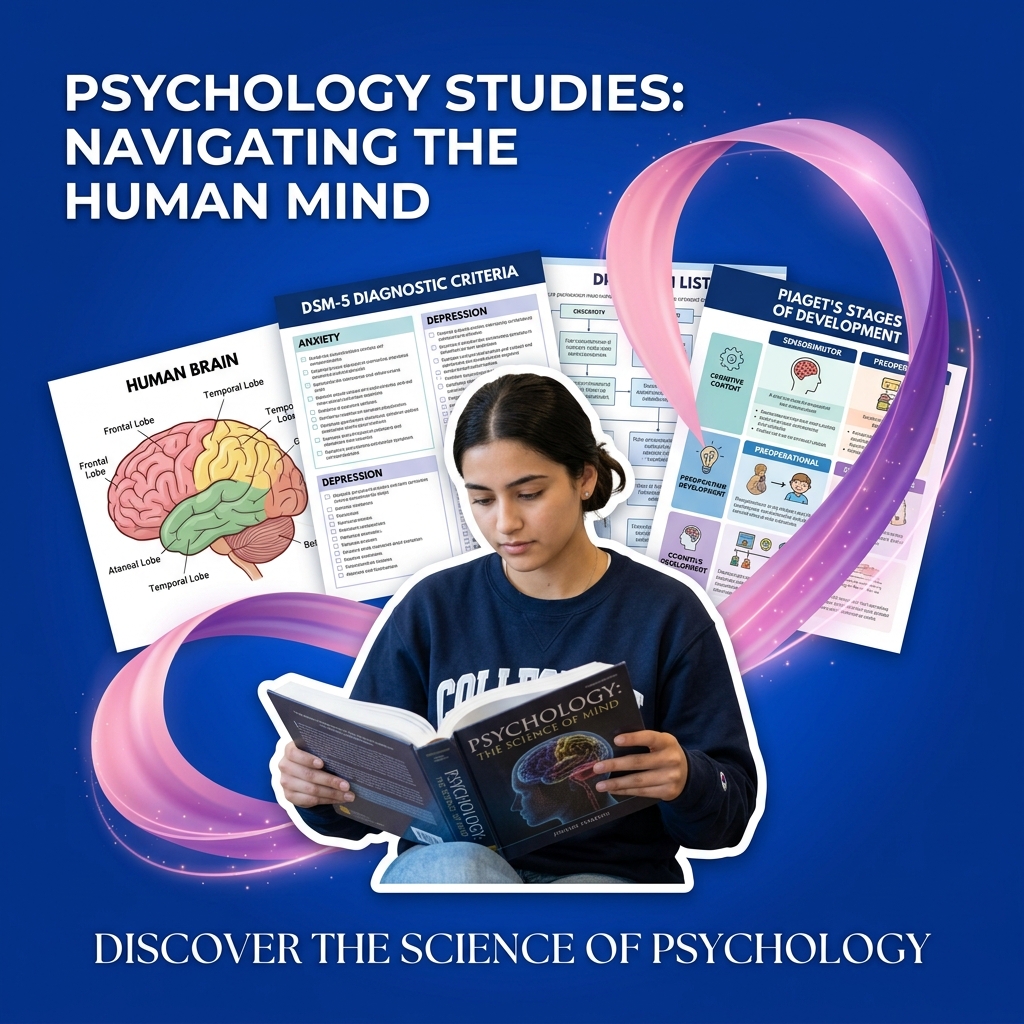
Psychology is one of the most popular majors in college, but many students struggle to transition from introductory memorization to advanced social science analysis. In upper-level psychology courses, exams rarely ask for simple definitions of terms. Instead, you are tested on your ability to apply diagnostic criteria (like the DSM-5) to complex patient vignettes or use developmental and cognitive theories to explain human behavior.
Passive reading of case studies or highlighting textbook pages is a highly ineffective study method. It creates an illusion of competence—you recognize the symptoms of a disorder when reading them on a page, but you struggle to recall and apply them to a blank case vignette on an exam.
AI models can act as highly capable interactive psychology tutors. You can use an AI to generate mock clinical vignettes based on specific diagnostic criteria, explain complex cognitive and behavioral theories, and quiz you on case-analysis logic.
However, using AI to write your research papers, diagnose real individuals, or copy diagnostic summaries for class assignments is a violation of academic integrity. The key is to use the AI to generate practice case studies for active retrieval practice, while doing the analytical work yourself.
Conceptual psychology workflow with AI
- Explain diagnostic criteria conceptually: Ask the AI to define and compare similar psychological conditions in plain language.
- Generate mock patient vignettes: Practice applying DSM-5 criteria to simulated, brief case histories.
- Connect behavior to theoretical frameworks: Use AI to explain how different psychological schools of thought (e.g., cognitive, behavioral, psychodynamic) would interpret a patient's symptoms.
- Practice effortful active recall: Quizzing yourself on diagnostic decisions without looking at references.
Building Focused Deep Work Blocks for Case Analysis
Reading clinical case histories and academic psychology papers requires intense, focused concentration. A single distracted glance at a phone can break your comprehension of a patient's complex behavioral timeline.
In Deep Work: Rules for Focused Success in a Distracted World, Cal Newport outlines the necessity of distraction-free concentration when mastering difficult concepts. To study psychology effectively, you must isolate your attention. Set up a dedicated "deep work" session by turning off notifications and blocking out 60 to 90 minutes. Use an AI assistant to generate a mock patient vignette, read through it with absolute focus, and draft your diagnostic analysis before checking the AI's explanation key. This focused, effortful practice builds the deep cognitive connections required for exam success.
The Case Analysis Prompt
To practice diagnosing clinical cases using DSM-5 guidelines, upload your target disorders to your AI assistant and use this prompt:
Act as a clinical psychology professor. Explain the diagnostic differences between [e.g., Generalized Anxiety Disorder and Panic Disorder] conceptually.

Please generate a study guide:
1. List the key diagnostic criteria for each disorder from the DSM-5 in plain, conceptual language.
2. Create a realistic, 150-word mock patient vignette displaying symptoms of one of these disorders. Do not name the disorder in the vignette.
3. Ask me 3 diagnostic questions about the case to help me practice my clinical reasoning.
4. Provide a hidden spoiler key with the correct diagnosis and explanation that I can check after answering.
Step-by-Step Psychology Review
Step 1 — Deconstruct theoretical frameworks
If you are studying cognitive theories (such as Piaget's stages of development or operant conditioning schedules), ask the AI to explain them through real-world scenarios:
Explain Piaget's sensorimotor stage versus preoperational stage using everyday examples of how children interact with objects. Provide 3 mock scenarios and ask me to identify which stage is being demonstrated.Step 2 — Practice differential diagnosis
On psychology exams, many cases involve overlapping symptoms. Ask the AI to help you practice differential diagnosis:
Create a mock patient vignette where a patient displays symptoms that could be either Major Depressive Disorder or Bipolar II Disorder (hypomanic phase). Ask me to list which symptoms support each diagnosis and explain how I would make a final determination.Step 3 — Apply theories to case studies
Use AI to understand how different theoretical viewpoints explain the same behavior. Ask:
Describe a case of a person with a severe fear of public speaking. Explain how a cognitive-behavioral therapist would approach this case compared to a psychodynamic therapist.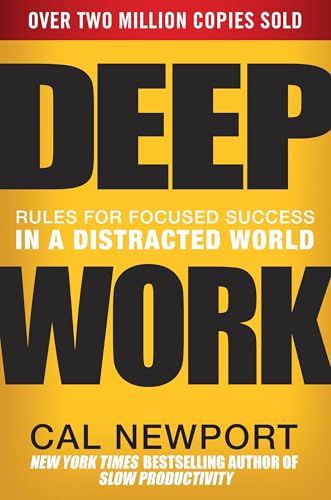
Deep Work: Rules for Focused Success in a Distracted World
Cal Newport's guide on cultivating intense, distraction-free concentration. Essential reading for students looking to master difficult subjects in less time.
AI Study Pilot receives a small commission from qualifying Amazon purchases at no extra cost to you.Common mistakes
* Diagnosing based on a single symptom: AI can help you understand that clinical diagnosis requires meeting a specific cluster of criteria over a defined duration. Don't rush your analysis.
* Confusing mock practice with real clinical advice: AI models are excellent study helpers, but they are not medical diagnostic tools. Use them strictly for academic coursework prep, never for real-world self-diagnosis.
* Copying pre-written case summaries: If your assignment asks you to analyze a case study, write the analysis yourself. Use AI to generate parallel practice cases to build your skills before tackled the graded assignment.
Disclosure: AI Study Pilot may add affiliate links later. We recommend free-first tools where possible and never promise guaranteed grades or outcomes.