AI research workflow · Updated May 2026
Perplexity AI for Student Research: A Source-Checking Workflow That Avoids Citation Mistakes
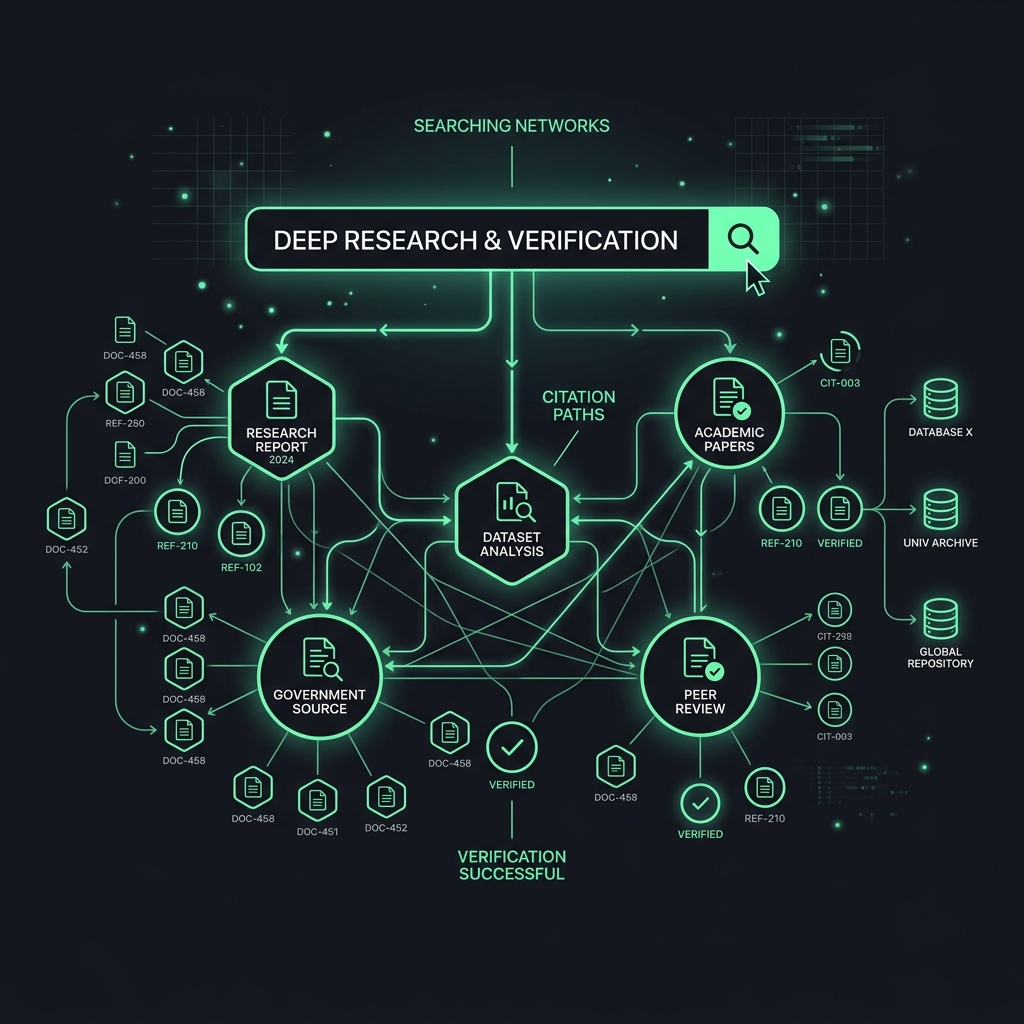
Perplexity can be useful for exploring a topic because it often presents answers with linked sources. For school research, the important habit is to treat those links as starting points, not finished citations.
Introduction
When you start a research paper, the hardest part is often not writing the first sentence. It is figuring out which sources are relevant, which claims are worth checking, and what search terms you should use next. AI answer engines can help with that early exploration, especially when they show links to sources.
Perplexity is commonly used as an AI search and answer tool. Because tool features, models, limits, and pricing can change, students should check the current Perplexity interface and help pages before relying on any specific setting. The workflow below does not depend on a paid feature. It focuses on safe habits: ask focused questions, open the sources, verify the claims, and build your own notes.
Quick answer: the safe Perplexity workflow
- Turn your assignment into a research question.
- Ask Perplexity for background and possible source directions.
- Open every source you might use.
- Check author, date, publication, evidence, and relevance.
- Write notes in your own words with the real source details.
- Use your library database or Google Scholar for stronger academic sources when needed.
- Cite only sources you personally read and verified.
The goal is not to make Perplexity write the paper. The goal is to make your research process less scattered.
When Perplexity is useful for students
Perplexity can be helpful when you need a fast map of a topic. Good uses include:
- Getting beginner-friendly background before reading academic sources.
- Finding search terms, subtopics, and competing viewpoints.
- Locating news, policy pages, reports, or explainers to investigate further.
- Generating questions to ask your library database.
- Comparing how different sources describe the same issue.
It is less appropriate for:
- Creating a final bibliography without checking sources.
- Replacing peer-reviewed database research when your assignment requires scholarly sources.
- Copying AI-written paragraphs into your paper.
- Using a source because it appeared in an AI answer, even if it does not support the claim.
Step 1 — Start with the assignment, not the tool
Before opening Perplexity, rewrite the assignment in one sentence. Include the class, source requirements, date range, and output type.
I need to research [topic] for a [class level] paper. The assignment requires [number/type] sources, including [peer-reviewed/news/book/primary source], and the paper must answer [research question]. Help me identify subtopics and search terms. Do not write the paper.This prevents the AI from giving a broad answer that feels helpful but does not match your assignment.
Step 2 — Ask for a research map
Use Perplexity to create a map of the topic. You are looking for vocabulary, names, organizations, debates, and source types.
Give me a research map for this question: [your question]. Include key terms, 3 competing viewpoints, important organizations or authors to search for, and what types of sources would be strongest for a student paper.After the answer appears, do not copy it into your draft. Instead, make a short list of search terms and questions to investigate.
Step 3 — Inspect the sources before trusting the answer
Linked sources are useful only if you open them. For each source, check:
- Who created it? Author, organization, publication, university, agency, or company.
- When was it published or updated? Some topics need very current information.
- What type of source is it? News article, academic paper, blog post, official report, encyclopedia, or marketing page.
- Does it actually support the AI’s claim? Read the relevant section, not just the title.
- Is it acceptable for your assignment? A helpful explainer may not count as a scholarly source.
If a source is weak, biased, outdated, or irrelevant, do not use it just because the AI listed it.
Step 4 — Build a claim-and-source table
Instead of saving a long AI answer, create a simple table in your notes.
| Claim I might use | Source I opened | What I verified | Use in paper? |
|---|---|---|---|
| Remote tutoring can improve access for some students | Opened education report or study | Checked method, date, and population | Maybe, if relevant |
| A tool has a specific feature | Opened official product page or help page | Checked current wording | Only if needed |
| A statistic appears in an article | Opened original data source if available | Checked whether the number is quoted correctly | Use original if possible |
This table forces you to separate what the AI said from what the source actually supports.
Step 5 — Move from Perplexity to stronger research channels
For many school papers, Perplexity is a starting point, not the final research database. After you identify terms and authors, search:
- Your school library database.
- Google Scholar, if appropriate for your class.
- Official government, university, or organization websites.
- Primary sources required by your assignment.
- Course readings your instructor already approved.
If your assignment requires peer-reviewed sources, confirm peer-review status in the library database or journal information. Do not assume a source is scholarly because an AI answer sounds formal.
Step 6 — Use Perplexity for follow-up questions
Once you have real sources, ask follow-up questions that improve your understanding without replacing your reading.
I found these three source titles: [list titles]. Help me create comparison questions I should answer while reading them. Do not summarize sources you cannot access accurately; focus on what I should look for.What keywords should I search in a library database to find peer-reviewed research about [specific angle]? Include synonyms and narrower terms.Give me a checklist for evaluating whether a source about [topic] is credible for a college research paper.Step 7 — Cite only what you personally checked
Never cite Perplexity as if it were the original source of a fact unless your assignment specifically asks you to analyze AI output. For normal research papers, cite the actual article, report, book, dataset, or webpage you read.
Also avoid copying formatted citations generated by AI without checking them. Citation generators can make mistakes with author names, titles, dates, capitalization, page ranges, DOIs, and URLs. Use your required style guide, your library’s citation tools, or official source metadata.
Copy-ready prompts for student research
Topic narrowing prompt
Help me narrow this broad topic into 5 researchable questions for a student paper: [topic]. For each question, explain what kinds of sources would be needed and what might be too broad.Search terms prompt
Create search terms for researching [question]. Include synonyms, related concepts, narrower terms, broader terms, and phrases I can try in a library database.Source evaluation prompt
I am considering this source for a class paper: [paste title, author, publication, date, and link if allowed]. Give me questions to evaluate its credibility, relevance, evidence, and possible bias. Do not decide for me; help me inspect it.Claim verification prompt
This AI answer made the following claim: [claim]. What should I check in the linked source before trusting it? Give me a step-by-step verification checklist.Reading notes prompt
I read this source myself. Here are my notes: [paste your notes]. Help me organize them into: main claim, evidence, useful quote location, limitations, and how it connects to my research question. Do not add unsupported facts.Common mistakes to avoid
Mistake 1: Believing a claim because it has a link
A link is not proof. Open it and confirm the exact claim.
Mistake 2: Letting the AI choose your thesis
Use AI to explore angles, but your thesis should come from reading, comparing evidence, and following the assignment.
Mistake 3: Ignoring source type
A company blog, government report, peer-reviewed article, and newspaper story can all be useful, but they do different jobs in a paper.
Mistake 4: Using old information for fast-changing topics
For AI tools, prices, policies, laws, and technology claims, check the current official source and date.
Mistake 5: Citing a source you only saw in an AI summary
If you did not open and read the relevant part of the source, do not cite it.
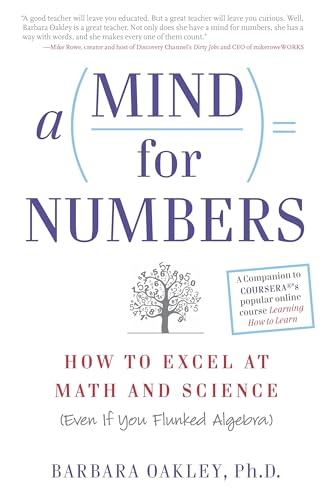
A Mind for Numbers: How to Excel at Math and Science
Dr. Barbara Oakley's actionable guide to unlocking analytical thinking. Perfect for students tackling STEM classes who want to beat procrastination and master complex formulas.
AI Study Pilot receives a small commission from qualifying Amazon purchases at no extra cost to you.FAQ
Is Perplexity good for student research?
It can be useful for early exploration, search terms, source discovery, and background questions. It should not replace reading sources or using required academic databases.
Can I cite Perplexity in my paper?
Usually you should cite the original source you read, not the AI answer. If your assignment specifically asks about AI output, follow your instructor’s citation guidance for AI tools.
Are Perplexity sources always reliable?
No. Sources can be irrelevant, outdated, low quality, or not strong enough for your assignment. Always inspect the source yourself.
Can Perplexity find peer-reviewed articles?
It may point you toward scholarly-looking material, but you should verify peer-review status through your library database, the journal, or your instructor’s required research tools.
How do I avoid plagiarism when using AI research tools?
Do not copy AI wording into your paper. Use AI for planning and questions, then read sources yourself, take notes in your own words, quote carefully, cite correctly, and follow your class policy.
Final recommendation
Perplexity can make research feel less overwhelming, but it is not a replacement for source judgment. Use it to map the topic, find directions, and generate better questions. Then open the sources, verify the claims, and write from your own understanding.