Chemistry & pre-med · Updated June 2026
Learn Chemical Kinetics & Reaction Rates with AI Safely
Master reaction orders, integrated rate laws, and reaction mechanisms using Socratic AI coaching to analyze chemical kinetics data sets safely.

In general chemistry and physical chemistry, chemical kinetics is the study of reaction rates—how fast chemical reactions occur—and the factors that influence these rates, such as concentration, temperature, and catalysts. Unlike chemical thermodynamics, which determines if a reaction is spontaneous (using Gibbs Free Energy), kinetics focuses on the pathway the reaction takes and the speed of that transformation. Mastering kinetics requires students to determine reaction orders from experimental data tables, write differential rate laws, perform calculations using integrated rate laws, and evaluate step-by-step reaction mechanisms.
Because kinetics homework sets involve analyzing data tables and graphing concentrations over time, students often paste experimental datasets into AI tools and ask them to determine the rate law, calculate the rate constant (\(k\)), or compute half-lives. However, letting AI perform these data analyses for you prevents you from developing the graphing skills, algebraic manipulation, and logical reasoning needed to pass college chemistry, succeed on the MCAT, or design industrial chemical processes. This guide outlines a safe, active-learning study workflow to use AI as a Socratic chemical kinetics coach.
Step 1: Determining Reaction Orders from Initial Rates Data Socraticly
A rate law expresses the relationship between the rate of a reaction and the concentrations of its reactants (e.g., \(Rate = k[A]^x[B]^y\)). The exponents \(x\) and \(y\) are the reaction orders, which must be determined experimentally. In the initial rates method, students compare trials from a data table where the concentration of one reactant changes while the other is held constant to see how the change impacts the initial rate of the reaction.
Use this prompt to check your reaction order calculations Socraticly:
I am analyzing an initial rates data table for the reaction A + B -> C. In Trial 1, [A] = 0.1 M, [B] = 0.1 M, and Rate = 2.0 x 10^-3 M/s. In Trial 2, [A] = 0.2 M, [B] = 0.1 M, and Rate = 8.0 x 10^-3 M/s. Act as a Socratic general chemistry tutor. Do not calculate the reaction order or write equations. Ask me how the concentration of A changes from Trial 1 to Trial 2, how the initial rate responds to this change, and have me explain what algebraic power relates the two changes to find the order of reactant A. Guide me.Step 2: Selecting and Applying Integrated Rate Laws
An integrated rate law expresses reactant concentration as a function of time. The formula differs depending on the reaction order:
- Zeroth-order: \([A]_t = -kt + [A]_0\) (Graphing \([A]\) vs. \(t\) yields a straight line with slope \(-k\)).
- First-order: \(\ln[A]_t = -kt + \ln[A]_0\) (Graphing \(\ln[A]\) vs. \(t\) yields a straight line with slope \(-k\)).
- Second-order: \(\frac{1}{[A]_t} = kt + \frac{1}{[A]_0}\) (Graphing \(\frac{1}{[A]}\) vs. \(t\) yields a straight line with slope \(k\)).
Practice integrated rate law calculations Socraticly with this prompt:
I am solving a problem where a reactant decomposes via a first-order reaction with a rate constant k = 0.035 min^-1. The initial concentration is 0.5 M, and I want to find the concentration after 45 minutes. Act as a Socratic chemistry coach. Do not write the equation or calculate the concentration. Ask me to identify the correct integrated rate law for a first-order reaction, show me how to isolate [A]_t algebraically, and guide me through the substitution steps. Guide me.Step 3: Auditing Multi-Step Reaction Mechanisms
Many chemical reactions do not occur in a single step but rather through a sequence of elementary steps called a reaction mechanism. The speed of the overall reaction is determined by the slowest step in the mechanism, known as the rate-determining step. A proposed mechanism is only valid if its rate-determining step produces a rate law that matches the experimentally determined rate law.
Check your reaction mechanism logic Socraticly using this prompt:
I am evaluating a two-step mechanism for a reaction: Step 1 (Slow): 2 NO_2 -> NO_3 + NO. Step 2 (Fast): NO_3 + CO -> NO_2 + CO_2. Act as a Socratic chemistry tutor. Do not solve the rate law for me. Ask me to write the rate law for the slow step based on its molecularity, explain why the fast step does not dictate the overall rate law, and ask me what the overall chemical equation is when adding the steps. Guide me step-by-step.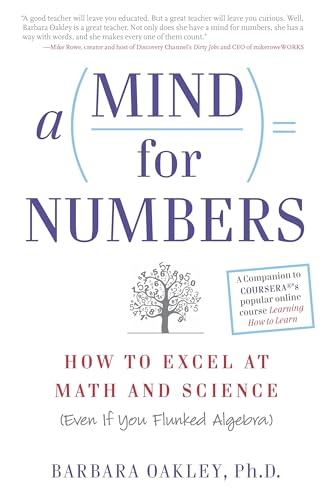
A Mind for Numbers: How to Excel at Math and Science
Dr. Barbara Oakley's actionable guide to unlocking analytical thinking. Perfect for students tackling STEM classes who want to beat procrastination and master complex formulas.
AI Study Pilot receives a small commission from qualifying Amazon purchases at no extra cost to you.Common mistakes
Keep these chemistry kinetics traps in mind:
- Using stoichiometric coefficients for rate laws: The most common student error is writing a rate law directly from the balanced equation (e.g., assuming \(aA + bB \rightarrow C\) has rate law \(Rate = k[A]^a[B]^b\)). Exponents in rate laws must be determined experimentally; they only match coefficients if the reaction is an elementary single-step reaction.
- confusing rate constant (\(k\)) and reaction rate: The reaction rate changes as reactants are consumed, but the rate constant \(k\) remains constant throughout the reaction at a given temperature. The rate constant only changes if the temperature changes or if a catalyst is introduced.
- Using the wrong units for the rate constant: The units of \(k\) depend on the overall reaction order. For a 0th order reaction, the unit is \(M/s\); for a 1st order reaction, it is \(s^{-1}\); for a 2nd order reaction, it is \(M^{-1}s^{-1}\). AI models frequently output incorrect units for \(k\).
FAQ
- How does a catalyst speed up a reaction? A catalyst increases the reaction rate by providing an alternative reaction mechanism with a lower activation energy (\(E_a\)). It is consumed in an early step of the mechanism and regenerated in a later step, so it does not appear in the overall balanced equation. Prompt: "Socraticly quiz me on how a catalyst affects the activation energy on a reaction coordinate diagram, and ask me to explain why it does not change the thermodynamic spontaneity."
- What is the Arrhenius equation? The Arrhenius equation models how temperature impacts the rate constant: \(k = A e^{-E_a/RT}\). It shows that as temperature increases or activation energy decreases, the rate constant \(k\) increases exponentially. Prompt: "Socraticly quiz me on the logarithmic form of the Arrhenius equation and ask me how to calculate the activation energy from a plot of ln(k) vs 1/T."
- How is half-life derived for first-order reactions? The half-life (\(t_{1/2}\)) is the time required for reactant concentration to drop to half its initial value. For a first-order reaction, substituting \([A]_t = 0.5[A]_0\) into the integrated rate law yields \(t_{1/2} = \ln(2)/k \approx 0.693/k\). This means the half-life of a first-order reaction is independent of initial concentration. Prompt: "Socraticly guide me through the algebraic derivation of the first-order half-life formula from the integrated rate law."
Final recommendation
Chemical kinetics is the science of reaction dynamics. Do not rely on AI calculators or search results to solve your concentration tables or integrate your rates. Instead, plot your concentration data on paper to identify linear fits, decompose reaction mechanism steps systematically, and leverage Socratic AI prompt sessions to audit your rate law exponents, rate constant units, and half-life derivations.
Disclosure: AI Study Pilot may add affiliate links later. We recommend free-first tools where possible and never promise guaranteed grades or outcomes.