Biology study · Updated June 2026
How to Learn Microbiology and Memorize Pathogens and Lab Stains With AI Safely
Learn how to use AI safely to master microbiology lab procedures, memorize key pathogen groups, and practice clinical vignettes conceptually.
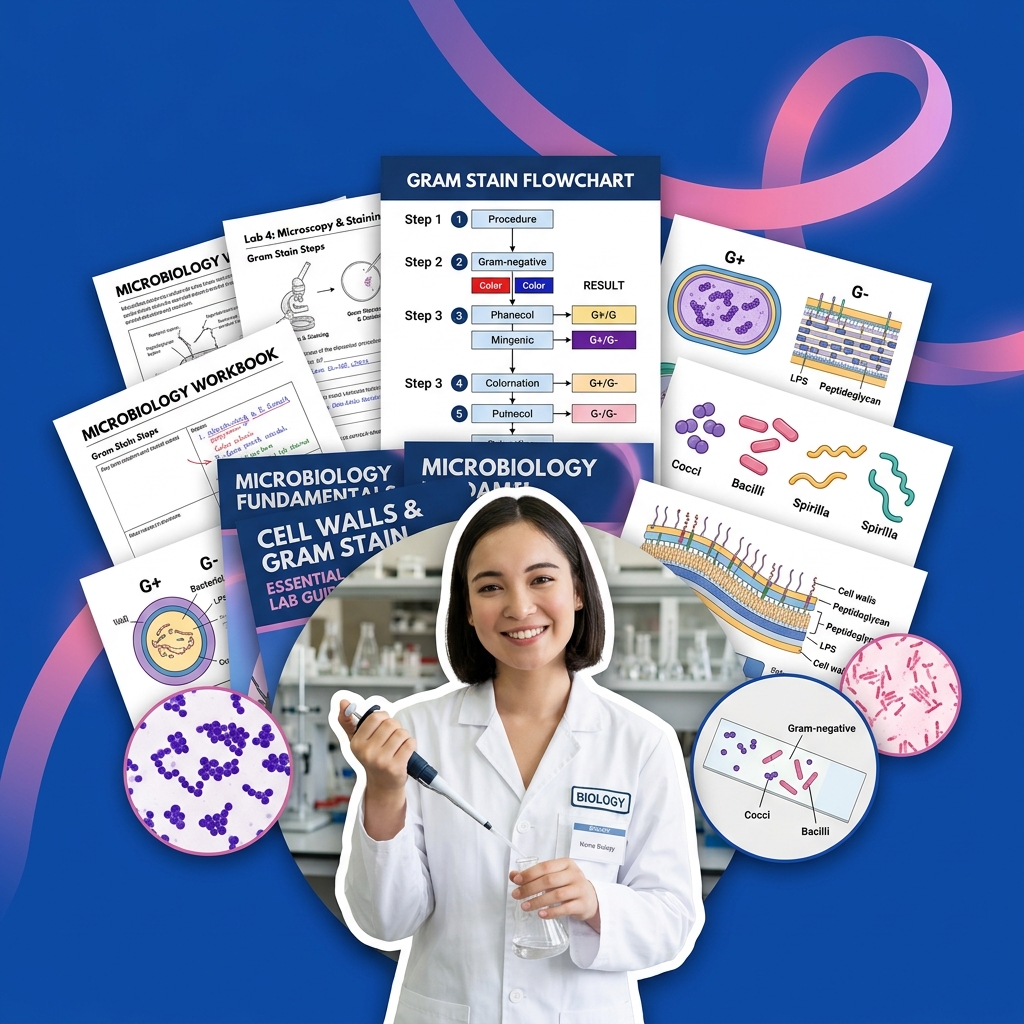
Microbiology is a core requirement for nursing, pre-med, dental, and biology majors. Unlike introductory biology, microbiology requires you to master a massive volume of highly specific pathogen details (such as virulence factors, transmission routes, and disease manifestations) alongside complex laboratory procedures like the Gram stain, acid-fast stain, and biochemical culture testing.
Many students try to study microbiology by passively reading lecture slides. But when presented with a clinical vignette on an exam—such as identifying a Gram-negative, lactose-fermenting bacillus that causes urinary tract infections—passive memory will fail you.
AI tools can serve as highly effective Socratic tutors to help you organize microbiological classifications, practice biochemical pathways, and drill clinical scenarios actively.
A Safe, Concept-First Microbiology Study Workflow
To learn microbiology conceptually without using shortcuts that violate academic integrity, follow this three-step study workflow:
1. Classification and Comparison Grids
Microbiology is full of dichotomous classifications: Gram-positive vs. Gram-negative, aerobes vs. anaerobes, and DNA vs. RNA viruses. Use AI to compare these groups side-by-side. Ask the model to explain the structural differences (such as peptidoglycan thickness or lipopolysaccharide presence) that determine their laboratory behavior.
2. Socratic Lab Procedure Walkthroughs
If you are struggling to remember the steps or reagents of a laboratory stain (such as the crystal violet, iodine, decolorizer, and safranin steps in a Gram stain), ask the AI to quiz you. Have it present one step at a time and ask you what happens to the bacterial cell wall if a reagent is skipped.
3. Clinical Vignette Quizzing
Microbiology exams frequently use patient case studies. Ask the AI to act as a Socratic clinical tutor, generating clinical vignettes based on specific pathogens you are studying. Have the AI guide you through the process of using lab clues (shape, stain, oxygen requirements) to identify the pathogen.
---
Microbiology Prompts You Can Copy
Use these optimized prompt templates to turn AI into a microbiology coach:
For Gram-Staining Steps and Troubleshooting
I am studying the Gram stain procedure in microbiology. Can you act as a Socratic tutor and quiz me on the steps? Present one question at a time. Start by asking me what the primary stain is and what happens to Gram-positive vs. Gram-negative cell walls during this first step. Wait for my response before moving to the next step.For Pathogen Comparison Charts
I am comparing Gram-positive cocci, specifically 'Staphylococcus aureus' and 'Streptococcus pyogenes'. Can you explain the key biochemical test (e.g., catalase test) used to differentiate them in a lab? Explain the chemical reaction and the visual result of the test clearly.For Clinical Case Practice
I am preparing for an exam on bacterial pathogens. Please generate a Socratic clinical vignette about a patient presenting with symptoms of a bacterial infection. Include lab findings (such as Gram stain result, shape, and oxygen requirement) but do not reveal the name of the bacteria. Ask me questions to help me deduce the pathogen step-by-step.---
Common Microbiology Study Mistakes to Avoid
* Treating AI as a Medical Diagnostic Tool: Never use AI tools to diagnose real-world medical symptoms or interpret real patient lab reports. Keep your prompts strictly focused on hypothetical, textbook-based academic scenarios.
* Memorizing Without Structure: Do not ask the AI for a giant, unorganized list of pathogens. Instead, ask it to help you group pathogens by their shapes (cocci, bacilli, spirilla) and Gram stain characteristics first.
Ignoring Virulence Mechanisms: Rushing to memorize the name of the disease a bacterium causes is not enough. You must understand how* it causes disease. Ask the AI to explain the mechanisms of specific toxins (like endotoxins vs. exotoxins) or structures (like capsules or flagella).
---

Make It Stick: The Science of Successful Learning
The gold standard for cognitive science learning. Learn how active recall, spaced repetition, retrieval practice, and varied study schedules dramatically improve retention over passive re-reading.
AI Study Pilot receives a small commission from qualifying Amazon purchases at no extra cost to you.FAQ
Why do Gram-positive bacteria stain purple while Gram-negative stain pink?
Gram-positive bacteria have a thick layer of peptidoglycan in their cell walls that retains the crystal violet-iodine complex during the decolorization step, staining them purple. Gram-negative bacteria have a thin peptidoglycan layer and an outer membrane; the decolorizer washes away the crystal violet, allowing them to take up the pink counterstain (safranin).
How do I use AI to create microbiology flashcards?
Describe the characteristics of a pathogen (e.g., Escherichia coli) and ask the AI: "Generate three flashcard QA pairs for this pathogen. Card 1 should cover Gram stain and morphology, Card 2 should cover key disease association, and Card 3 should cover a unique biochem/culture feature."
What is a zone of inhibition in an agar diffusion test?
The zone of inhibition is the clear area around an antibiotic disc on an agar plate where bacterial growth has been prevented. The size of the zone indicates how sensitive the bacteria are to that specific antibiotic.
Disclosure: AI Study Pilot may add affiliate links later. We recommend free-first tools where possible and never promise guaranteed grades or outcomes.