Computer science · Updated June 2026
How to Learn Computer Networking and Master IP Subnetting With AI Safely
Learn how to use AI safely to visualize TCP/IP packet flows, practice binary subnetting math, and trace network routing protocols with step-by-step Socratic hints.
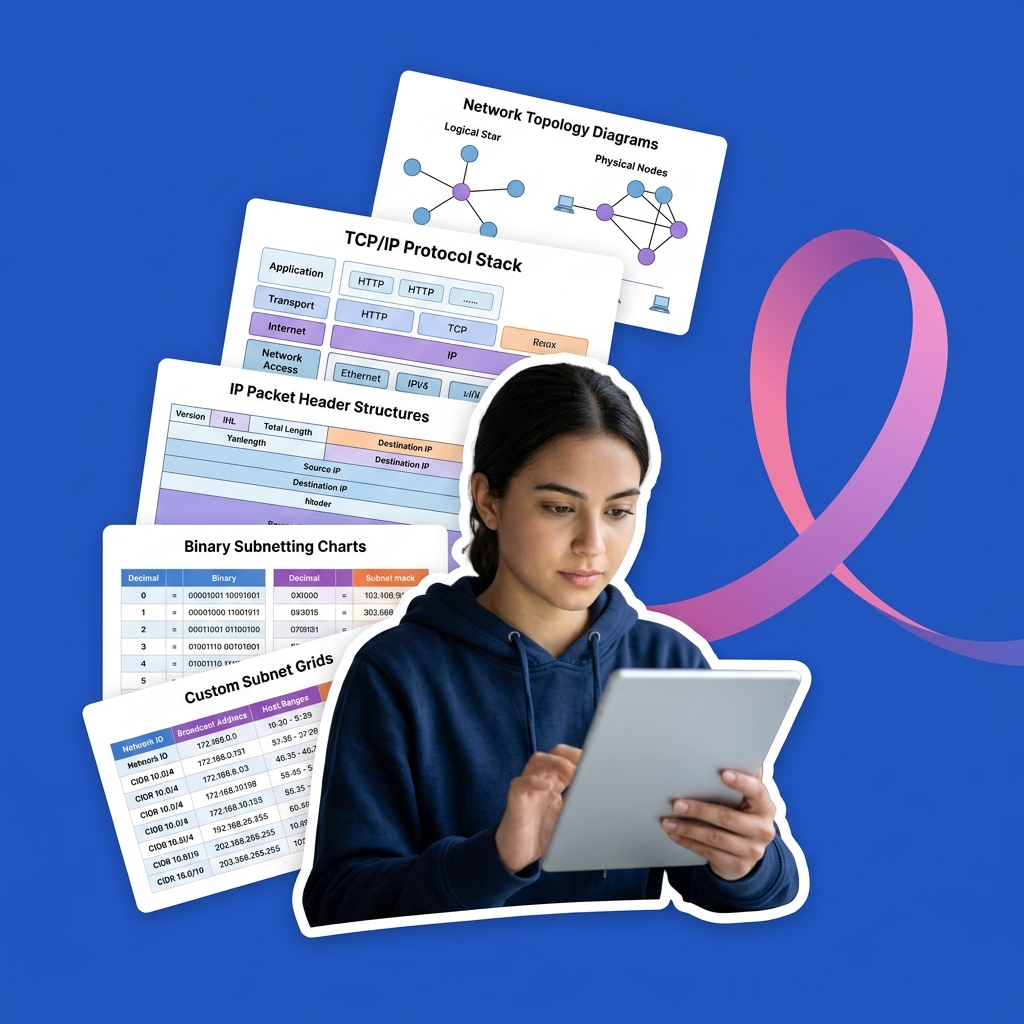
Computer networking is the backbone of modern technology, covering how devices exchange data across local networks and the global internet. For computer science, IT, and cybersecurity students, networking courses introduce complex theoretical frameworks like the OSI model, TCP/IP protocol stack, routing protocols, and IP addressing.
One of the most notoriously difficult practical skills in networking is IP subnetting—dividing a single network range into smaller, efficient subnets. The math involves binary conversions, bitmasks, and power-of-two calculations.
Because subnetting is calculation-heavy, pasting homework problems into an AI to get the subnet ranges is a common shortcut. However, outsourcing this math prevents you from passing timed exams or handling network configurations in real-world IT environments.
Instead of letting AI calculate subnets for you, use it as a Socratic networking tutor to explain protocol interactions, trace packets conceptually, and verify your manual binary calculations.
A Socratic Study Workflow for Computer Networking
Master networking concepts and subnetting calculations with this three-step study workflow:
1. Packet Flow Tracing
Understanding how data moves from an application (like a web browser) down through the transport, network, and physical layers is highly abstract. Do not ask AI to "code a packet tracer." Instead, ask it to "describe the encapsulation and decapsulation steps, including header additions (TCP, IP, Ethernet), as a web page request travels from a client to a server." Sketch these layer transitions on a smart notebook as you read the description.
2. Socratic Subnetting Practice
Subnetting requires calculating the network address, broadcast address, first/last usable host addresses, and subnet masks. When practicing, solve the problem manually first by converting the IP address and subnet mask into binary. Paste your binary math steps into the AI and ask it to review your method (e.g., checking your host bit calculations) without giving the final decimal numbers.
3. Routing and Protocol Analogies
Routing protocols (like OSPF, BGP, or RIP) determine the path packets take. Ask the AI to explain these complex path-finding logic rules using everyday analogies (e.g., comparing OSPF link-state updates to a city GPS map update, or BGP path vectors to international airline routing flights).
---
Networking Study Prompts You Can Copy
Socratic Subnetting Tutor
I am practicing Classless Inter-Domain Routing (CIDR) subnetting. Here is a problem I am trying to solve: [Insert Problem, e.g., "Given the IP address block 192.168.1.0/24, divide it into 4 equal subnets. Calculate the subnet mask and host ranges"]. Act as a Socratic networking tutor. Do not give me the answers. Ask me questions about how many host bits I need to borrow, and check my math step-by-step as I write my binary calculations.Protocol Comparison Explainer
Explain the conceptual differences between Transmission Control Protocol (TCP) and User Datagram Protocol (UDP). Use a real-world analogy to contrast TCP's connection-oriented handshake with UDP's connectionless transmission, and explain why a streaming video application uses UDP while a web browser uses TCP.Routing Protocol Analogy Generator
Explain how the Border Gateway Protocol (BGP) works to coordinate traffic between different Autonomous Systems (AS) on the internet. Use a postal service or shipping logistics analogy to explain the concept of routing paths and policy-based routing.---
Common Networking Study Mistakes to Avoid
* Relying on AI calculators: Standard subnetting calculation websites and AI tools can instantly spit out host tables. If you rely on these tools during practice, you will fail exams where only scratch paper and basic arithmetic are allowed.
Ignoring Header Formats: Do not skip memorizing packet header fields (such as TTL, sequence numbers, or port ranges). AI can explain why* these fields exist (e.g., explaining how TTL prevents routing loops), but you must memorize their placement.
* Confusing Layers: Make sure you do not confuse Layer 2 (Data Link - MAC addresses, switches) with Layer 3 (Network - IP addresses, routers). AI can help you visualize these boundaries by explaining how switch tables and routing tables work together.
---
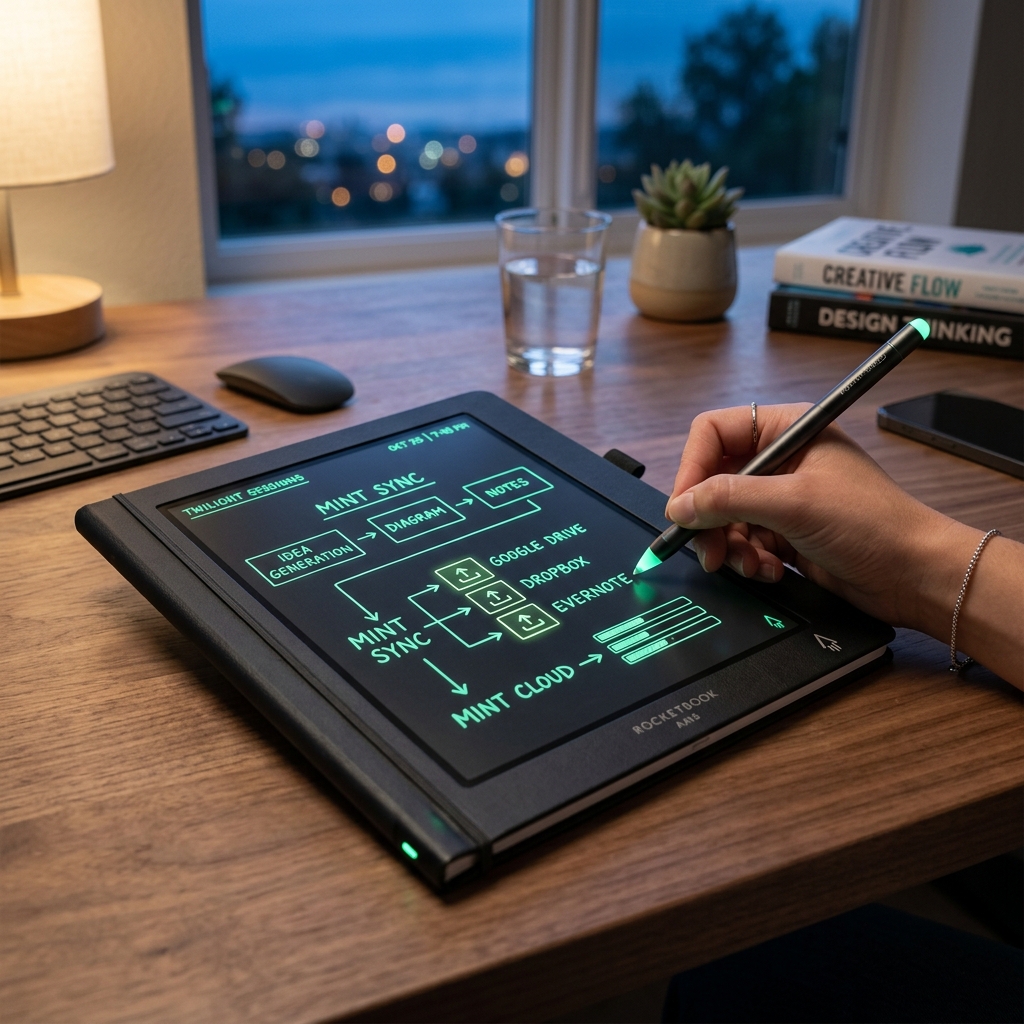
Rocketbook Smart Reusable Notebook
Eco-friendly, reusable physical notebook that digitizes and syncs your hand-written diagrams and notes directly to your favorite cloud storage for AI-assisted study.
AI Study Pilot receives a small commission from qualifying Amazon purchases at no extra cost to you.FAQ
What is CIDR notation?
Classless Inter-Domain Routing (CIDR) is a method for allocating IP addresses where the suffix (e.g., /24) indicates the number of bits reserved for the network prefix, allowing for flexible subnet sizes compared to old class-based networks (Class A, B, C).
Why do subnets lose two host addresses in every subnet?
In any IP subnet range, two addresses are reserved and cannot be assigned to hosts: the first address (host portion is all binary zeros) is the Network Address, and the last address (host portion is all binary ones) is the Broadcast Address.
How do I practice networking hands-on?
Use free tools like Cisco Packet Tracer to build virtual topologies, and use AI to guide your configuration commands (like setting up static routes or VLANs) conceptually without writing the scripts for you.
Disclosure: AI Study Pilot may add affiliate links later. We recommend free-first tools where possible and never promise guaranteed grades or outcomes.