Test prep · Updated June 2026
How to Prep for the GMAT and Master Data Insights and Quant Sections With AI Safely
Master GMAT problem solving, data sufficiency, and critical reasoning with Socratic AI feedback and structured practice drills.

Preparing for the Graduate Management Admission Test (GMAT) is a crucial step for aspiring business leaders applying to top MBA programs. The GMAT Focus Edition evaluates quantitative reasoning, verbal reasoning, and data insights. Because of the complex logic and critical thinking required, many candidates spend hours reviewing practice questions and copying explanations directly from AI tools.
However, having an AI solve problems for you does not build the core reasoning skills needed to tackle adaptive test questions under time constraints. This guide outlines a safe, active-learning study workflow to use AI as a Socratic coach to master GMAT quantitative logic and data insights.
Step 1: Dissecting GMAT Data Sufficiency and Data Insights Socraticly
The GMAT Data Insights section evaluates your ability to analyze multi-source data, interpret graphs, and solve Data Sufficiency (DS) problems. Data Sufficiency requires determining whether the given statements are sufficient to answer a question, rather than calculating the final numerical answer.
Set up a Socratic Data Sufficiency check with this prompt:
I am reviewing GMAT Data Sufficiency problems. Act as a Socratic business math coach. Present me with a medium-difficulty Data Sufficiency algebra or number properties question. Do not provide the statement evaluations or explain the solution. Ask me to evaluate Statement 1 first and explain my logic. Evaluate my reasoning and guide me with hints.Step 2: Critical Reasoning and Argument Analysis
The GMAT Verbal section tests Critical Reasoning, requiring you to analyze arguments, identify assumptions, and strengthen or weaken conclusions. Use AI to test your argument-deconstruction skills conceptually.
Practice deconstructing arguments with this prompt:
I want to practice GMAT Critical Reasoning. Act as a Socratic verbal tutor. Present me with a short argument passage and ask me to identify the conclusion and the underlying assumption of the argument. Do not present the multiple-choice options. Wait for my analysis, challenge my assumptions, and guide me with hints.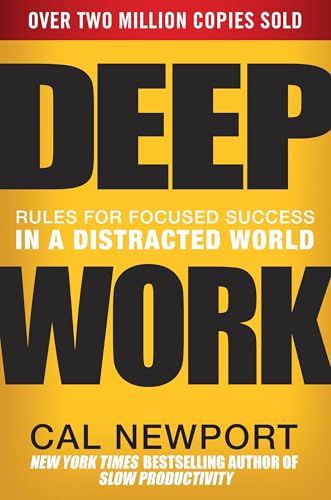
Deep Work: Rules for Focused Success in a Distracted World
Cal Newport's guide on cultivating intense, distraction-free concentration. Essential reading for students looking to master difficult subjects in less time.
AI Study Pilot receives a small commission from qualifying Amazon purchases at no extra cost to you.Common mistakes
Keep these pitfalls in mind when using AI for GMAT preparation:
- Focusing on calculations over estimation: GMAT Quant is a test of math logic, not arithmetic. Asking AI to calculate long solutions will prevent you from learning estimation techniques and shortcuts.
- Copying sentence explanations: In Verbal sections, asking AI for the answer to a question will not help you identify subtle grammatical rules or argument traps. Try to eliminate incorrect options yourself first.
- Overlooking the scratchpad workflow: The GMAT is taken on a computer using a physical laminated grid scratchpad. Always solve problems on paper or a dry-erase pad before checking your logic with AI.
FAQ
- How can I use AI to study GMAT arithmetic shortcuts? Paste your quantitative problem and ask: "Is there a logical shortcut (e.g., number properties, testing extreme cases) to solve this without doing standard algebraic calculation?"
- Can AI help me analyze multi-source reasoning? Yes! Paste a dense business scenario or text prompt, and ask: "What are the core conflicts and variables in this text? Ask me questions to test my understanding of the data relationships."
Final recommendation
GMAT success depends on your capacity to perform under pressure, manage time, and make logical deductions. Plan intense, distraction-free study blocks, practice using physical scratchpads to simulate exam conditions, and use Socratic AI checkpoints to audit your reasoning logic.
Disclosure: AI Study Pilot may add affiliate links later. We recommend free-first tools where possible and never promise guaranteed grades or outcomes.