Test prep · Updated June 2026
How to Prep for the LSAT and Master Logical Reasoning With AI Safely
Master LSAT logical reasoning, identify argument flaws, and map conditional logic with Socratic AI feedback and structured practice drills.
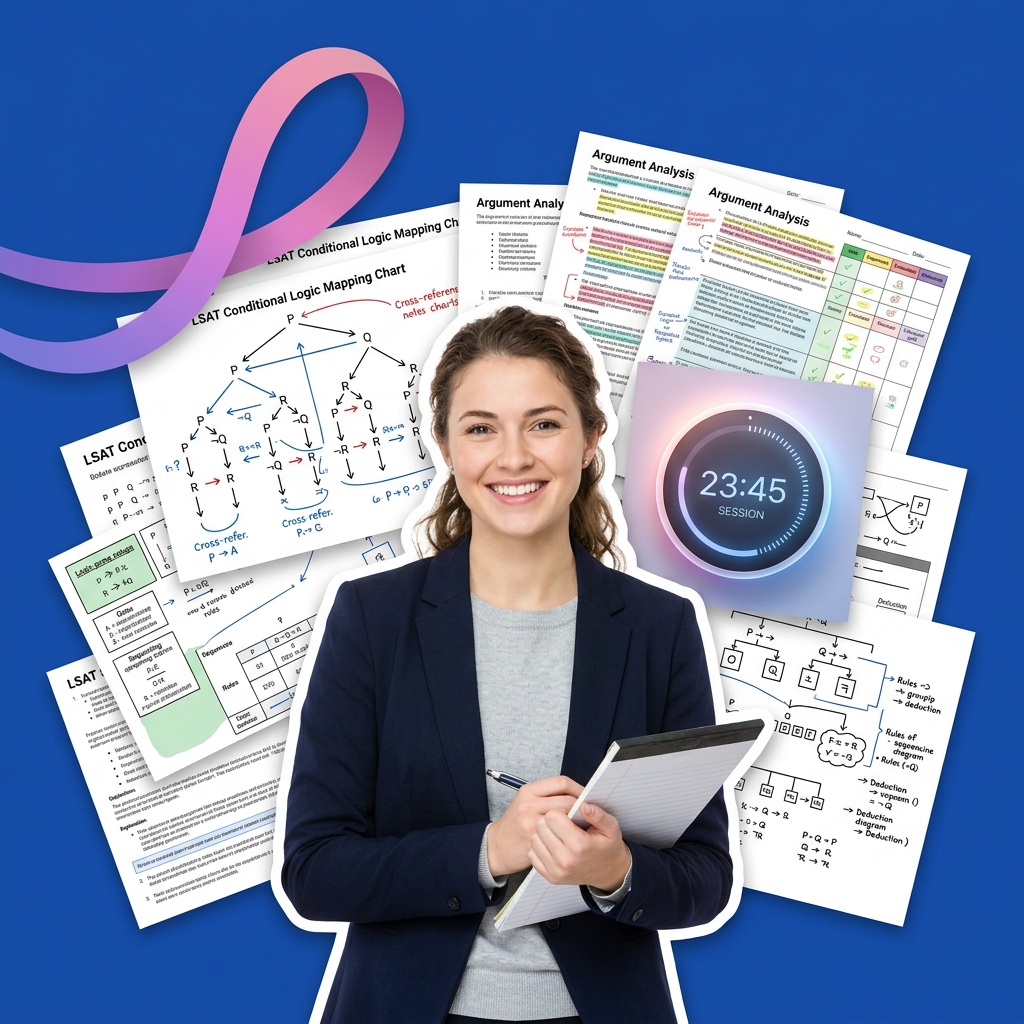
Preparing for the Law School Admission Test (LSAT) requires a radical shift in how you read and process information. The exam does not test your knowledge of legal facts; instead, it measures your proficiency in logical reasoning, formal logic, and reading comprehension. Under the pressure of scoring high for law school applications, many candidates copy argument passages into AI tools to get quick explanations.
However, having AI identify argument structures for you prevents you from building the mental pathways needed to spot logical flaws under strict time constraints. This guide outlines a safe, active-learning study workflow to use AI as a Socratic logical mentor to master LSAT Logical Reasoning and conditional logic.
Step 1: Mapping Conditional Logic and Formal Statements Socraticly
LSAT Logical Reasoning relies heavily on conditional statements (e.g., "if A, then B"; "only if C, then D"). Translating these statements into formal logic and understanding the contrapositive is essential. Instead of asking AI to map them, use it to verify your diagramming.
Set up a conditional logic check using this prompt:
I am practicing diagramming LSAT conditional statements. Here is the statement: "We will go to the park only if it does not rain, and if we go to the park, we will play soccer." Act as a Socratic formal logic coach. Do not map the statements or write the contrapositive. Ask me to identify the sufficient and necessary conditions for each part, and explain my setup. Evaluate my answers and guide me with hints.Step 2: Spotting Logical Flaws in Arguments
The LSAT frequently tests your ability to identify common logical flaws (e.g., correlation vs. causation, ad hominem, composition flaws). Use AI to test your flaw-spotting skills conceptually.
Practice identifying argument flaws with this prompt:
I want to practice identifying logical flaws in LSAT arguments. Act as a Socratic logic tutor. Present me with a short argument passage containing a classic logical flaw. Do not list multiple-choice options or name the flaw. Ask me to explain in my own words why the author's conclusion does not follow from the premises. Evaluate my explanation and guide me with hints.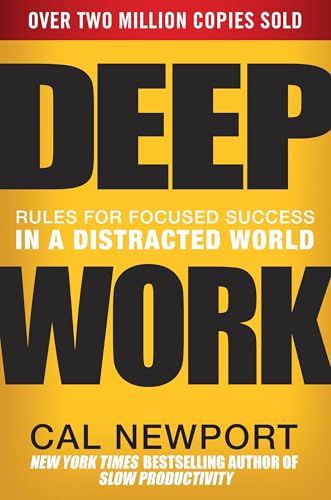
Deep Work: Rules for Focused Success in a Distracted World
Cal Newport's guide on cultivating intense, distraction-free concentration. Essential reading for students looking to master difficult subjects in less time.
AI Study Pilot receives a small commission from qualifying Amazon purchases at no extra cost to you.Common mistakes
Keep these pitfalls in mind when using AI for LSAT preparation:
- Copying Reading Comprehension passage summaries: In the Reading Comprehension section, summarizing paragraphs is your job. Relying on AI-generated summaries prevents you from building speed and tracking the author's perspective during the actual exam.
- Letting AI decide the correct option: If you get a practice question wrong, do not paste the answer choices to see which is correct. Instead, paste the passage and ask: "Why is choice B a weak option in this argument? Guide me with hints."
- Skipping timed practice sheets: The LSAT is a computerized test administered on a strict timer. AI can help you review concepts, but it cannot replace timed, full-length practice tests on the official LawHub platform.
FAQ
- How can I use AI to study GMAT and LSAT parallel reasoning? Parallel reasoning questions ask you to find the choice with logic most similar to the passage. Paste the passage's argument structure and ask: "What is the formal symbolic mapping of this argument? Guide me through identifying the correct pattern."
- Can AI help me study LSAT logic game setups? Although logic games are no longer on the current LSAT, analytical diagramming remains useful. Use AI to check if your diagram variables and initial deductions (if A is in slot 1, where can B go?) are logically sound.
Final recommendation
LSAT success depends on your ability to spot assumptions and diagram logic structures instantly. Design quiet, distraction-free study blocks, write out your logic maps on paper to build spatial memory, and use Socratic AI checkpoints to audit your analytical reasoning.
Disclosure: AI Study Pilot may add affiliate links later. We recommend free-first tools where possible and never promise guaranteed grades or outcomes.