Exam prep · Updated June 2026
How to Prep for the MCAT and Master Medical Passage Analysis With AI Safely
Prepare for high-yield MCAT sections (CARS, science passages) using active recall and Socratic AI feedback without copying explanations.
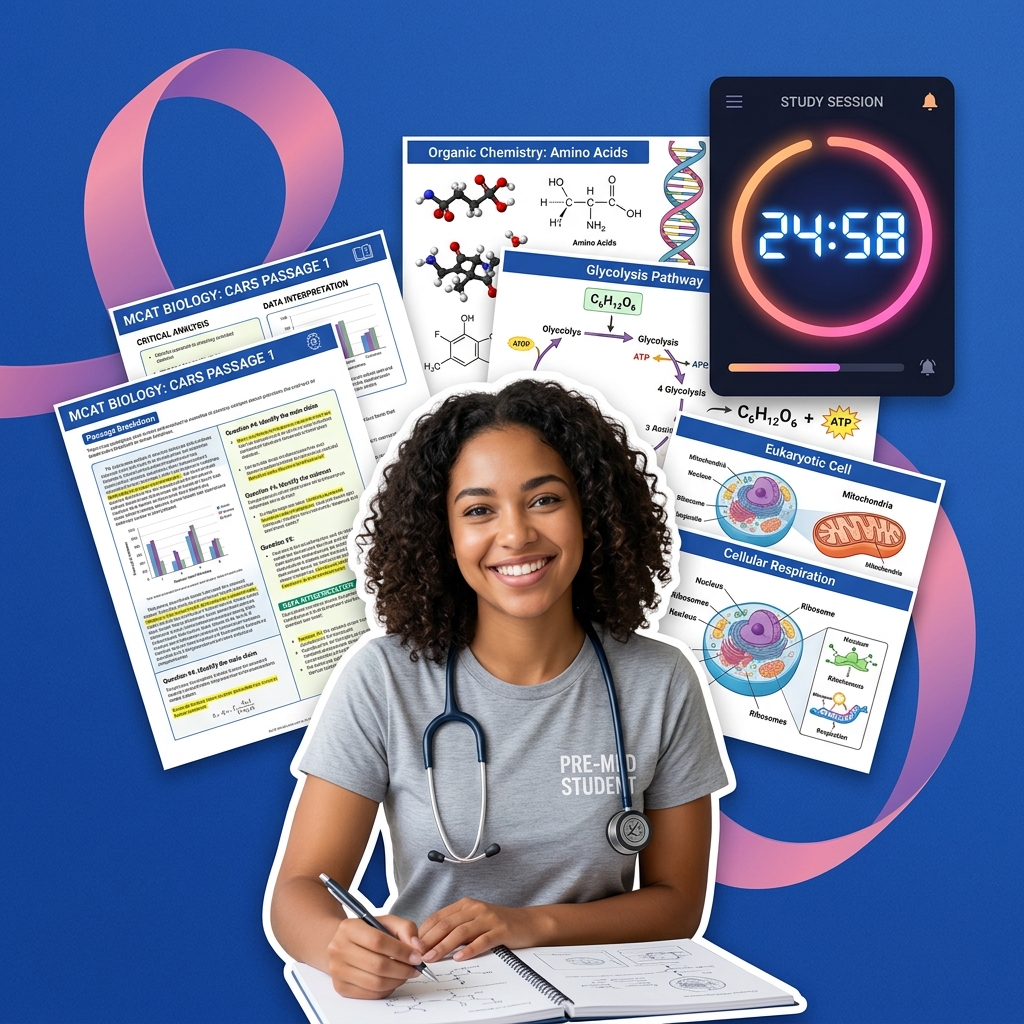
Preparing for the Medical College Admission Test (MCAT) is one of the most grueling phases of a pre-med student's journey. The exam does not just test your rote recall of biology, chemistry, and physics; it tests your capacity to analyze dense, complex scientific passages and draw logical conclusions under strict time limits.
Defaulting to passive study strategies (like reading prep books or copying passage answers from AI engines) will not build the deep analytical skills required for exam day. This guide outlines a safe, active-learning workflow to use AI as a Socratic tutor to master MCAT concepts and analyze passages.
Step 1: Building High-Yield active Recall Prompts
The MCAT requires deep conceptual understanding of topics like amino acid chemistry, thermodynamics, and nervous system regulation. Instead of asking AI to summarize chapters, use it to grill you on these concepts using active recall principles.
Set up a retrieval practice check using this prompt:
I am preparing for the MCAT and reviewing high-yield biology concepts (specifically glycolysis regulation and enzyme kinetics). Act as a Socratic MCAT tutor. Ask me one high-yield question at a time to test my understanding of regulation points and kinetic curves. Do not explain the answer; evaluate my response and guide me with hints if I miss a mechanism.Step 2: Socratic Analysis of Practice Passages
The hardest part of the MCAT is applying basic science principles to brand-new data, graphs, and experiment scenarios within passages.
To improve your passage reasoning without cheating, paste a sample passage or experiment setup (excluding the questions) and ask the AI to help you identify the independent variables, dependent variables, and underlying concepts.
Use this prompt structure for passage breakdowns:
Here is an experimental science passage I am analyzing for MCAT prep: [paste passage content]. Act as a Socratic research mentor. Do not tell me what the study shows. Instead, ask me questions to help me identify:
1. The independent and dependent variables in the experiments.
2. The control groups and why they were used.
3. The biochemical or physical theories underpinning this research.
Evaluate my explanations and guide me to the correct reasoning with hints.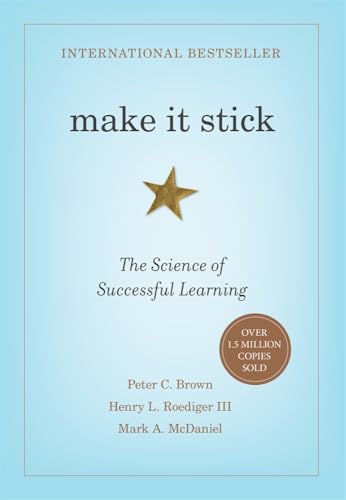
Make It Stick: The Science of Successful Learning
The gold standard for cognitive science learning. Learn how active recall, spaced repetition, retrieval practice, and varied study schedules dramatically improve retention over passive re-reading.
AI Study Pilot receives a small commission from qualifying Amazon purchases at no extra cost to you.Common mistakes
Keep these pitfalls in mind when using AI for MCAT preparation:
- Copying CARS explanations: In the Critical Analysis and Reasoning Skills (CARS) section, asking AI to explain why an answer choice is correct will not help you develop your own passage-mapping skills. Always attempt to map the passage's main thesis, tone, and paragraph functions on your own first.
- Relying on AI for raw fact checking: While LLMs are excellent for conceptual breakdowns, high-stakes facts (such as amino acid structures or physics equations) should always be verified against official AAMC resources or standard prep books.
- Skipping physical practice: The MCAT is a 7.5-hour computerized exam. AI can help you review concepts, but it cannot substitute for sitting down and taking full-length timed practice exams.
FAQ
- Can AI help me memorize equations? Yes! Use AI to help you find conceptual connections between equations (e.g., how the fluid flow rate equation relates to electric current principles), which makes them much easier to recall under pressure.
- How do I review my incorrect practice answers? Paste the question you got wrong, your reasoning, and the correct option. Ask: "I chose choice B because of [your reason], but the correct answer is C. Help me identify the flaw in my logic using Socratic hints."
Final recommendation
MCAT success depends on your ability to perform active retrieval and spacing of study material. Ground your study plan in proven learning science principles: alternate your subjects daily, test yourself constantly, and use physical books to limit screen fatigue during long study blocks.
Disclosure: AI Study Pilot may add affiliate links later. We recommend free-first tools where possible and never promise guaranteed grades or outcomes.