Exam prep · Updated May 2026
How to Create Practice Exams From Your Notes with AI
Learn how to use AI to generate highly customized mock tests, practice questions, and answer verification keys safely from your class notes.
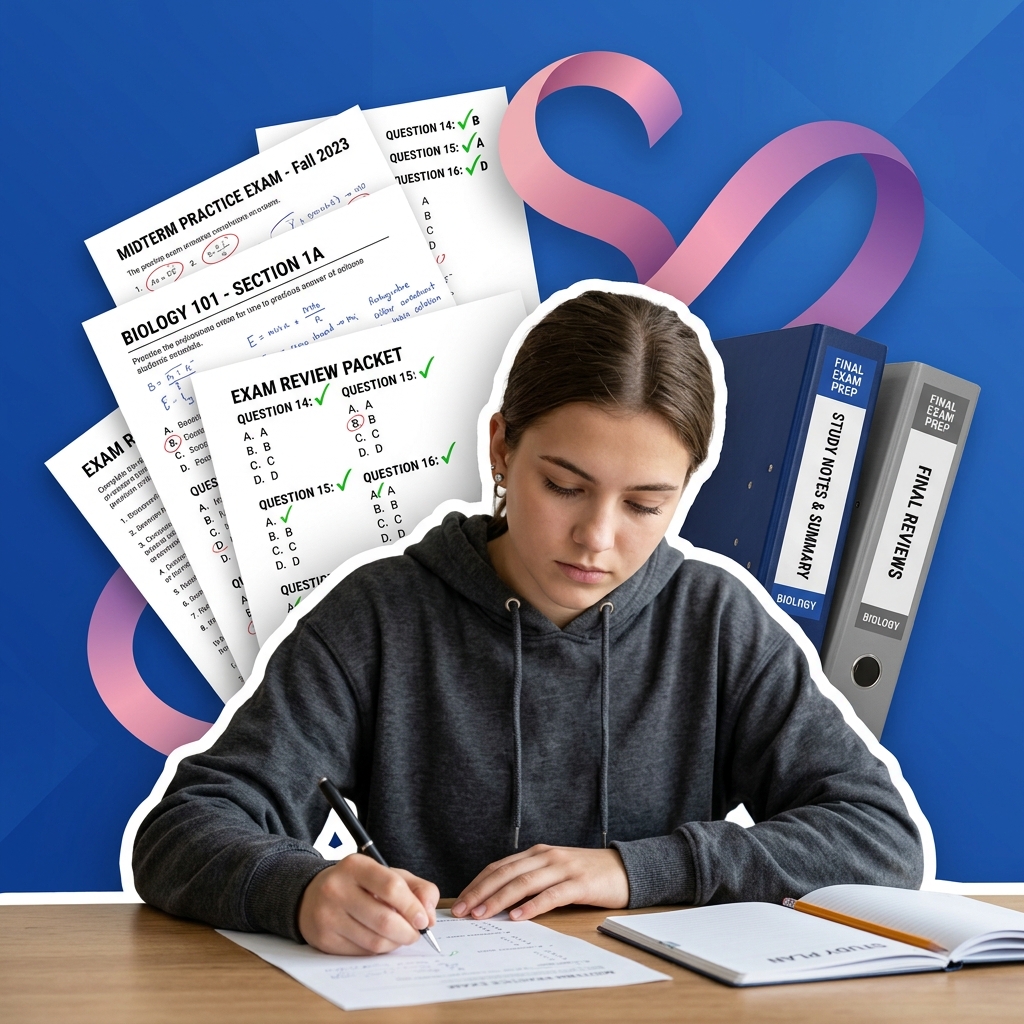
When preparing for midterms or finals, most students default to passive review techniques—re-reading textbooks, highlighting notes, and looking over lecture slides. While these methods make you feel familiar with the material, they build a false sense of security called the "illusion of competence."
AI models can act as an on-demand exam coordinator, transforming your lecture notes and slides into highly customized practice exams. If your notes are still scattered, it helps to first make a single organized study guide with AI, then turn that into the practice questions below.
According to cognitive science, self-testing is the single most effective way to lock in information. By forcing your brain to struggle and retrieve facts from memory, you build stronger neural paths that make it easier to recall details under the pressure of the real exam. To study effectively, use AI to generate mock tests, and then solve them under strict exam conditions.
Practice exam generation workflow with AI
- Consolidate your study materials: Gather your lecture notes, slides, and syllabus topics for the target exam unit.
- Run the mock test creator prompt: Ask the AI to build a balanced exam containing multiple-choice, fill-in-the-blank, and short-answer questions.
- Solve under strict test conditions: Hide your notes, set a timer, and solve the questions on paper without checking answers.
- Audit and grade your responses: Paste your written answers back into the chat to get grading feedback and detailed explanations.
- Implement retrieval practice rules: Focus on testing yourself multiple times over several days rather than cramming in one night.
The power of active retrieval and self-testing
In Make It Stick: The Science of Successful Learning, researchers detail that memory retention is dramatically improved through retrieval practice. Every time you force your brain to recall a fact or solve a problem without looking at notes, you prevent forgetting.
Active recall is hard work, and that cognitive struggle is exactly what signals your brain to strengthen the memory. Generating practice exams with AI gives you an endless source of custom self-tests, making your study sessions highly active and high-yield.
Step 1 — Setup the "Practice Exam Creator" prompt
To generate a high-quality mock test, do not just ask the AI to "quiz me." Use this structured prompt to generate a balanced exam paper:
Act as a college professor designing a midterm exam. Read the student study notes pasted below and write a 10-question practice exam.

Include:
- 5 Multiple-Choice questions (testing definitions and basic concepts).
- 3 Fill-in-the-Blank questions (testing key terms or formulas).
- 2 Short-Answer questions (requiring a 2-3 sentence explanation of a mechanism or theory).

Do not provide the answer key or explanations in the output. I want to solve the questions first.

Study Notes:
[Paste study notes here]
This creates a clean, distraction-free test paper.
Step 2 — Solve the exam manually
Solve the questions on paper or in a blank document. Commit to finishing the exam without checking your slides, textbooks, or opening browser tabs. If you get stuck, make a guess—the mental effort of guessing actually makes your brain more receptive to learning the correct answer afterward.
Step 3 — Get grading feedback
Once finished, paste your raw answers back into the AI to audit your work:
I have completed the practice exam. Below are my answers. Please grade my exam and output:
1. **Score**: Out of 10.
2. **Incorrect Answers**: Identify which questions I missed, explain the correct answer step-by-step, and reference the specific concept from my notes.
3. **Short-Answer Review**: Offer feedback on how I can make my short-answer explanations more precise or complete to earn maximum points.

My Answers:
[Paste your answers]
This provides an immediate, personalized diagnostic report on your knowledge gaps.
Common study mistakes to avoid
* Looking at answers while testing: Checking the answer key after each question ruins the retrieval process. Finish the entire exam before reviewing any answers.
* Only testing vocabulary: Exams require applying concepts. Ensure your practice exams contain short-answer or scenario-based questions, not just simple definition checks.
* Cramming a single test once: Space out your self-testing. Take one mock exam today, review your mistakes, and take a new, slightly different mock exam three days later.
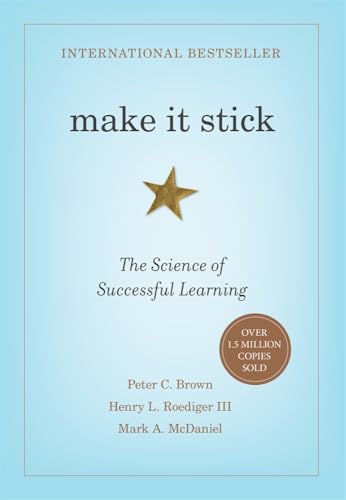
Make It Stick: The Science of Successful Learning
The gold standard for cognitive science learning. Learn how active recall, spaced repetition, retrieval practice, and varied study schedules dramatically improve retention over passive re-reading.
AI Study Pilot receives a small commission from qualifying Amazon purchases at no extra cost to you.Disclosure: AI Study Pilot may add affiliate links later. We recommend free-first tools where possible and never promise guaranteed grades or outcomes.