AI writing workflow · Updated May 2026
How to Use AI for Paraphrasing Without Plagiarism
Use AI to check clarity and citation risk without letting it rewrite sources into plagiarism.
Quick answer
- Read the source until you understand it.
- Close or hide the original sentence.
- Write the idea in your own words and structure.
- Compare your version with the source for closeness.
- Cite the source if the idea came from that source.
- Use AI to check risk, not to mass-rewrite paragraphs for submission.
Helpful sources behind this workflow
Why AI paraphrasing is risky
Many students use AI paraphrasers because they want text to sound different. The problem is that "sounds different" is not the same as original understanding. AI may keep the same structure, preserve too many distinctive phrases, or remove important context.
If the idea came from a source, you usually still need a citation even when every word changed.
Step 1: Understand the source first
Do not ask AI to paraphrase a sentence you do not understand. Start by identifying the claim, evidence, and purpose.
I am learning how to paraphrase. Explain the idea in this source passage at a beginner level, but do not create a paraphrase for my paper. Separate the main claim, key evidence, and terms I need to understand.

Source passage:
[paste allowed passage]
Step 2: Write your own version without looking
After you understand the idea, close the source and write from memory. This makes it easier to change both wording and structure.
I will paste my paraphrase and the original. Do not rewrite it for me yet. Tell me whether my version is too close in wording, too close in structure, missing the source's meaning, or missing citation.

Original:
[paste original]

My paraphrase:
[paste your version]
Step 3: Check for patchwriting
Patchwriting happens when a sentence keeps the source's structure and swaps a few words. It can happen accidentally, especially when the original wording is still in front of you.
- Same sentence order as the source.
- Same unusual phrases.
- Synonym swaps without real restructuring.
- No citation even though the idea is borrowed.
- A paraphrase you cannot explain without rereading the source.
Step 4: Keep quote, paraphrase, summary, and your idea separate
Use different labels in your notes so you know what belongs to the source and what belongs to you.
| Note type | What it means | Citation need |
|---|---|---|
| Quote | Exact source words. | Cite and use quotation marks or block quote format. |
| Paraphrase | Specific source idea in your own words. | Cite. |
| Summary | Larger source idea shortened in your own words. | Cite. |
| Your analysis | Your interpretation or connection. | Cite sources that influenced it if needed. |
Step 5: Use AI as a citation-risk checker
AI should not be the final authority, but it can help you notice obvious problems.
Act as a citation-risk checker. Compare my paraphrase with the source. Do not write a replacement paragraph. Flag:
1. Phrases that are too close
2. Sentence structure that is too similar
3. Meaning that changed
4. Missing citation or quote marks
5. Questions I should ask my instructor

Original:
[paste original]

My paraphrase:
[paste your paraphrase]
Step 6: Cite the source
Changing the words does not erase the source. If the information, interpretation, statistic, theory, or argument came from a source, cite it using the style your class requires.
AI citation output can be wrong, so verify author names, title, date, page numbers, DOI, and URL yourself.
Safe AI paraphrasing workflow
- Read the source.
- Explain it out loud in plain language.
- Hide the source.
- Write your own version.
- Reopen the source and compare.
- Add the correct citation.
- Ask AI to flag risk without rewriting the final answer.
- Revise in your own voice.
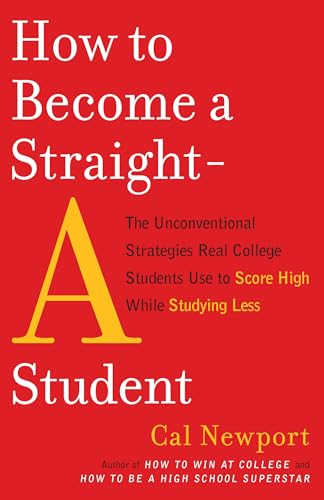
How to Become a Straight-A Student
A strategic study blueprint designed specifically for college students. Demystifies top performance and shows how to prepare for exams efficiently without cramming.
AI Study Pilot receives a small commission from qualifying Amazon purchases at no extra cost to you.Common mistakes
Mistake 1: Asking AI to "make this not plagiarism"
That prompt focuses on hiding similarity instead of understanding and citation.
Mistake 2: Forgetting that ideas need citations
A paraphrase usually still needs a citation because the idea came from somewhere else.
Mistake 3: Trusting AI citations without checking
AI can invent or mangle publication details. Verify citations from the actual source.
Mistake 4: Keeping the source open while rewriting
Looking at the source sentence while rewriting makes patchwriting more likely.
FAQ
Is AI paraphrasing allowed?
It depends on your class policy. Some instructors allow grammar support but not AI rewriting. Check first.
Is it plagiarism if I changed every word?
It can still be plagiarism if you use a source's idea without credit or keep the structure too close.
Can AI help me learn paraphrasing?
Yes, if you use it for explanation, comparison, and risk checks. It is riskier when you ask it to generate final wording for submission.
Final recommendation
Use AI to improve your paraphrasing process, not to disguise borrowed text. Understand first, write your own version, compare carefully, and cite the source.
Disclosure: AI Study Pilot may add affiliate links later. We recommend free-first tools where possible and never promise guaranteed grades or outcomes.