Engineering & physics · Updated June 2026
Learn Statics & Truss Analysis with AI Safely
Master static equilibrium equations, free-body diagrams, and truss member force calculations using Socratic AI coaching to analyze structures safely.

In civil, mechanical, and aerospace engineering, statics is the branch of mechanics that addresses bodies at rest or moving at a constant velocity. A cornerstone of any statics curriculum is truss analysis. A truss is a structure composed of slender members joined together at their endpoints (joints), commonly used to support bridges, roofs, and cranes. To analyze a truss, engineers must calculate the internal forces (tension or compression) in every member to ensure the structure can support its design loads without collapsing. This requires applying the conditions of static equilibrium: the sum of all forces and the sum of all moments acting on the system must equal zero ($\sum \mathbf{F} = 0, \sum \mathbf{M} = 0$).
Because tracing vectors at multiple joints and solving simultaneous linear equations is mathematically repetitive, students often upload truss diagrams to AI models and ask them to calculate the forces or write Matlab/Python solvers. However, letting AI do your statics math bypasses the vector decomposition and structural intuition needed to design safe bridges, mechanical frames, or aerospace structures. This guide outlines a Socratic study workflow to use AI as a statics and truss analysis tutor.
Step 1: Drawing Free-Body Diagrams and Calculating Support Reactions
Before analyzing the individual joints, you must treat the entire truss as a single rigid body in equilibrium to calculate the external reaction forces at the supports (typically a pin support that restricts movement in two directions, and a roller support that restricts movement in one direction). This requires summing the moments about a support to isolate and solve for the unknown reactions.
Use this prompt to check your external reaction calculations Socraticly:
I am analyzing a simply supported 2D truss of length 12 meters with a pin support at Joint A and a roller support at Joint B. There is a downward load of 10 kN at the midpoint. I want to calculate the vertical reaction forces at A and B. Act as a Socratic statics tutor. Do not solve for the reactions or write equations. Ask me to state the conditions for static equilibrium, explain how to set up a moment equation about Joint A to find the reaction at B, and verify my step-by-step calculations. Guide me.Step 2: Isolating Joints using the Method of Joints
Once external reactions are known, you can determine the internal forces in each member using the Method of Joints. This method involves isolating each joint as a particle in equilibrium. Because a particle has no dimensions, we only sum forces in the x and y directions ($\sum Fx = 0, \sum Fy = 0$). You must select a joint that has at least one known force and at most two unknown forces to solve the system.
Practice the Method of Joints Socraticly with this prompt:
I am analyzing Joint C of a truss, where two members meet at a 45-degree angle. I know there is an external vertical force of 5 kN acting downwards on Joint C, and one horizontal member is in tension with a known force of 5 kN. Act as a Socratic engineering coach. Do not solve the force components. Ask me to draw the free-body diagram of the joint, write the equilibrium equations for the x and y directions, and guide me through resolving the diagonal member force into its horizontal and vertical components. Guide me.Step 3: Spotting Zero-Force Members Visually
Truss analysis can be simplified by identifying zero-force members—members that carry no load under specific loading conditions. These members are included to increase stability during construction or prevent buckling under unexpected loads, but they carry zero force in the primary equilibrium analysis. There are two basic rules for identifying zero-force members:
- If only two non-collinear members meet at a joint and no external load or support reaction is applied to that joint, both members are zero-force members.
- If three members meet at a joint where two of them are collinear, and no external load or support reaction is applied, the third (non-collinear) member is a zero-force member.
Audit your zero-force member identification Socraticly with this prompt:
I am inspecting a truss where Joint D has three members meeting: two are collinear along the horizontal axis, and one is vertical. There is no external load or reaction at Joint D. Act as a Socratic statics coach. Do not identify the zero-force member directly. Ask me to sum the forces in the vertical direction at Joint D, explain why the vertical member force must equal zero to maintain equilibrium, and have me explain the general rules for spotting these members. Guide me.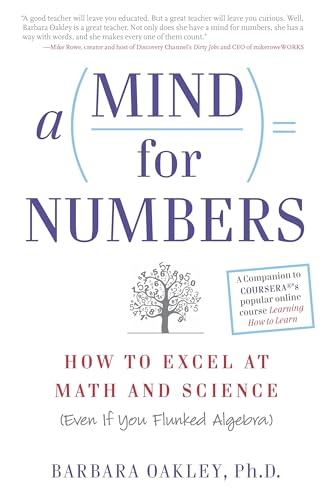
A Mind for Numbers: How to Excel at Math and Science
Dr. Barbara Oakley's actionable guide to unlocking analytical thinking. Perfect for students tackling STEM classes who want to beat procrastination and master complex formulas.
AI Study Pilot receives a small commission from qualifying Amazon purchases at no extra cost to you.Common mistakes
Watch out for these classic statics traps:
- Misidentifying Tension vs. Compression: Tension pulls away from the joint (tensile force is positive), while compression pushes into the joint (compressive force is negative). Mixing up these directions leads to sign errors that propagate through subsequent joints. AI systems frequently mix up tension and compression signs.
- Applying Joint Equilibrium to Joints with More Than Two Unknowns: If you select a joint with three unknown member forces, you cannot solve it using only $\sum Fx = 0$ and $\sum Fy = 0$. You must find another joint to solve first, or use the Method of Sections.
- Forgetting that loads must only be applied at joints: Truss theory assumes that loads are pin-applied at nodes. If a load is applied along a member's length, it introduces bending moments, and the structure must be analyzed as a frame rather than a truss.
FAQ
- When should I use the Method of Sections instead of the Method of Joints? Use the Method of Joints when you need to find the force in every member of the truss. Use the Method of Sections when you only need to find the force in a few specific members (especially members in the middle of a large truss), as it allows you to cut the truss and solve for forces using moment equations directly. Prompt: "Socraticly quiz me on when to apply the Method of Sections vs. the Method of Joints, and ask me to explain how cutting a truss reveals internal forces."
- What does it mean for a truss to be statically determinate? A truss is statically determinate if all its support reactions and internal member forces can be calculated using only the equations of static equilibrium. For a 2D truss with $j$ joints, $m$ members, and $r$ reaction forces, the determinacy condition is $m + r = 2j$. If $m + r > 2j$, the truss is statically indeterminate and requires deformation analysis to solve. Prompt: "Socraticly quiz me on the formula for static determinacy, and ask me to explain why adding extra diagonal bracing makes a truss indeterminate."
- Why do we assume truss members are two-force members? We assume members are connected by frictionless pins, and loads are applied only at joints. This means each member experiences only two collinear forces at its endpoints (directed along the member's axis), meaning there are no shear forces or bending moments inside the members. Prompt: "Socraticly quiz me on the assumptions of truss theory and why they simplify structural math."
Final recommendation
Statics is the foundation of structural design. Do not rely on AI solvers or Matlab templates to calculate joint vectors for you. Instead, draw clean free-body diagrams, decompose vectors carefully, and utilize Socratic AI checkpoints to audit your moment equations, joint equilibrium matrices, and tension-compression signs.
Disclosure: AI Study Pilot may add affiliate links later. We recommend free-first tools where possible and never promise guaranteed grades or outcomes.