AI exam prep · Updated May 2026
How to Use AI to Study for Exams Without Cheating: A 7-Day Safe Study Plan
AI can be a powerful study coach when it helps you understand, practice, and remember. It becomes risky when it replaces your thinking, writes assessed work for you, or breaks your school’s rules. This guide shows how to use AI as a tutor — not a shortcut.
Is using AI to study cheating?
Usually, no — if AI is helping you learn. Potentially, yes — if AI does the assessed work for you or gives you an unfair advantage. Rules vary by school, course, exam board, and employer, so the safest first step is always to check the official policy.
- Usually safe: concept explanations, study schedules, practice quizzes, flashcards, feedback on your reasoning, summaries of your own notes, and mock oral exams.
- Risky or not allowed: asking AI for answers during an exam, submitting AI-written essays or code, uploading confidential exam questions, fabricating citations, or asking tools to make work “undetectable.”
Useful references include UNESCO guidance on generative AI in education, UNC Learning Center study advice, and OpenAI’s Study Mode explanation.
The golden rule: AI should make you think, not replace your thinking
If AI removes the struggle completely, it may also remove the learning. The best AI study workflow is: attempt first, ask for feedback second, verify third. Ask for hints, questions, analogies, error analysis, and practice — not final answers to graded work.
Help me understand this concept, but do not give me a final answer to any assignment or exam question. Use hints, questions, and examples so I do the thinking.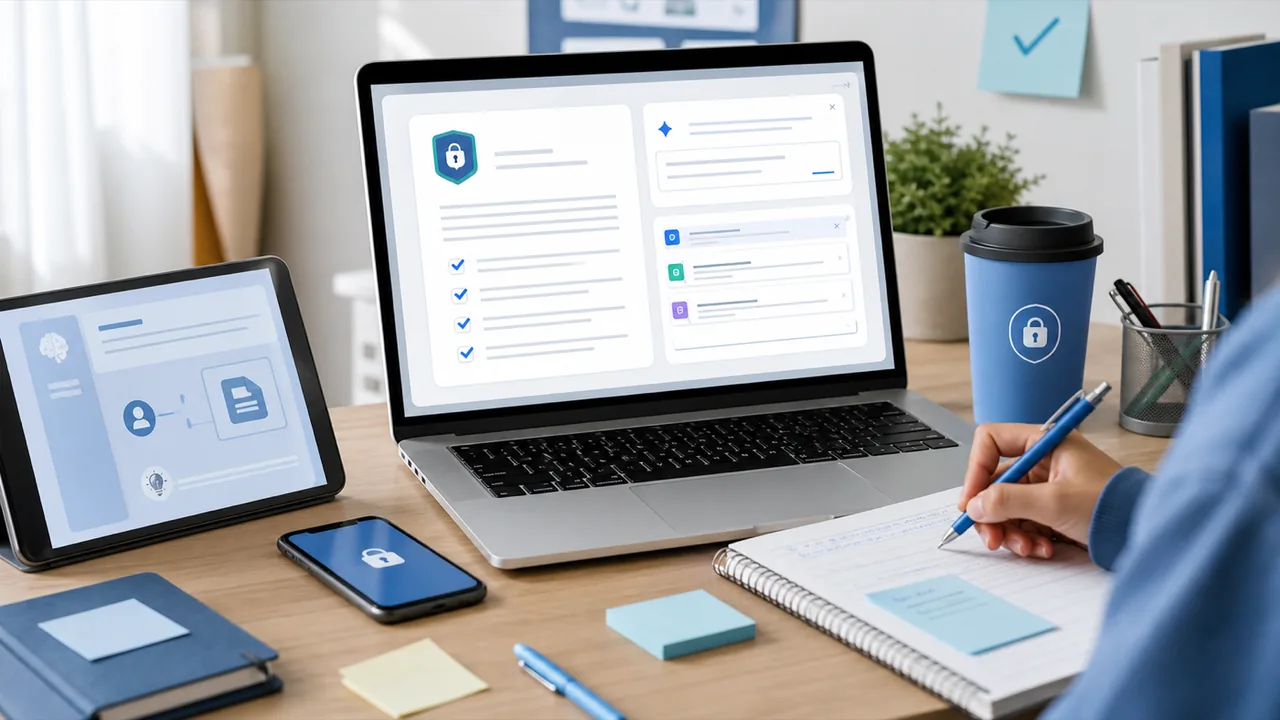
The 5-minute AI safety checklist
- Read your class, university, or exam policy on AI use.
- Ask your instructor if AI is allowed for practice quizzes, explanations, and planning.
- Do not paste student IDs, private records, classmates’ work, confidential employer material, or unreleased exam content.
- Keep a simple AI-use log if your course requires disclosure: tool, date, purpose, and what you changed.
- Verify important facts, formulas, quotes, and citations against course materials or trusted sources.
The 7-day safe AI exam study plan
Day 1: Map the exam and find weak spots
Collect the syllabus, lecture slides, notes, textbook chapters, old quizzes, and assignment feedback. Ask AI to turn the topic list into a checklist, then rate your confidence from 1–5 for each topic. Prioritize topics that are both important and weak.
Act as an exam study coach. I will paste my topic list, not confidential exam questions. Organize it into a 7-day study checklist. Ask me to rate my confidence from 1–5 and help me prioritize weak, high-value areas.Day 2: Learn weak concepts with Socratic explanations
Pick two or three weak topics. Ask AI to explain each at beginner, intermediate, and exam-ready levels. Make it quiz you before moving on.
Teach me [topic] like a tutor. Start simple, then ask me one question at a time. If I am wrong, give a hint first instead of the full answer.
Day 3: Build active-recall flashcards
Reading notes feels productive, but active recall is stronger. Turn notes into question-and-answer cards, then edit them yourself before using Anki, Quizlet, Notion, paper cards, or another system.
Create active-recall flashcards from these notes. Use definitions, examples, compare/contrast, and application questions. Put the question first and hide the answer under “Answer:”.Day 4: Practice questions and error analysis
Answer before looking. After each response, ask AI to grade your reasoning and label the mistake: concept gap, memory gap, careless error, wording issue, or time-pressure issue.
Quiz me on [topic] with 10 exam-style questions. Ask one at a time. Do not reveal the answer until I attempt it. After I answer, grade my reasoning and label the mistake type.
Day 5: Mixed practice and time pressure
Do not only practice topic by topic. Exams mix ideas. Ask for a timed mixed set across your weakest areas, then review the error log.
Create a 30-minute mixed practice session covering these topics: [list]. Use easy, medium, and hard questions. Ask one at a time and track recurring weaknesses.Day 6: Teach-back day
Explain your weakest topics back to AI as if teaching a beginner. This exposes vague knowledge fast. Ask AI to challenge unclear logic.
I will explain [topic] in my own words. Act as a strict but supportive tutor. Identify gaps, incorrect assumptions, missing steps, or vague wording. Ask follow-up questions.Day 7: Light review and exam-day boundaries
Review flashcards, revisit the error log, take a short final quiz, and make an exam-day checklist. Do not panic-cram with AI late at night. Sleep and calm recall matter.
Based on my error log below, create a final 45-minute review plan for the day before my exam. Focus only on high-impact weak points and include what not to do with AI during the actual exam.
Best tools for this workflow
- NotebookLM: best for studying from your own notes, PDFs, readings, and lecture material.
- ChatGPT: strong for interactive tutoring, practice questions, coding help, and study planning.
- Claude: strong for essay feedback, reasoning, long explanations, and writing clarity.
- Anki or Quizlet: useful for active recall and spaced repetition.
For a broader tool list, read our guide to the best free AI tools for students.
Safe AI study rules
- Use AI as: tutor, quizmaster, planner, feedback coach, flashcard generator, concept explainer, and practice partner.
- Do not use AI as: exam answer source, ghostwriter, citation fabricator, detector-bypass tool, or replacement for your course materials.
Common mistakes to avoid
- False confidence: summaries can feel easy. Test yourself without looking.
- Hallucinations: AI can invent facts. Verify formulas, dates, citations, and definitions.
- Overdependence: attempt first, ask AI second.
- Privacy leaks: never upload private or confidential material without permission.
- Policy mismatch: one teacher may allow AI for brainstorming while another bans it for a specific assessment.
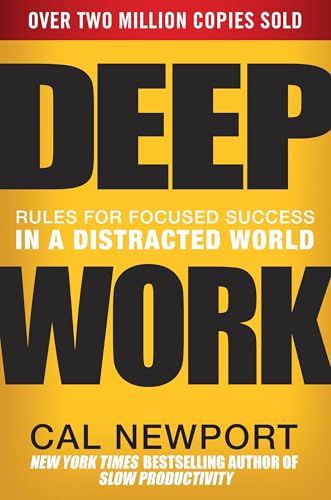
Deep Work: Rules for Focused Success in a Distracted World
Cal Newport's guide on cultivating intense, distraction-free concentration. Essential reading for students looking to master difficult subjects in less time.
AI Study Pilot receives a small commission from qualifying Amazon purchases at no extra cost to you.Final recommendation
AI is safest when it behaves like a tutor, not a substitute. Use it to plan, practice, explain, quiz, and reflect. Keep the real work — thinking, solving, writing, verifying, and learning — in your hands.
Disclosure: This article is educational and does not encourage cheating or academic misconduct. We may add affiliate links later, but recommendations should remain practical, honest, and student-safe.