Active learning · Updated June 2026
How to Create Socratic AI Study Tutors for Exam Prep
Learn how to turn standard LLMs into Socratic dialogue partners that test your understanding, give hints, and improve conceptual memory.
Preparing for college midterm and final exams requires active engagement with course concepts. Simply reading over your lecture notes or highlighted textbooks creates an "illusion of competence"—you feel like you know the material because it looks familiar, but you cannot retrieve it under exam pressure.
According to cognitive science, active recall and retrieval practice are the most effective ways to build strong memory traces.
You can turn any standard AI assistant into a highly interactive, Socratic study partner. Instead of asking the AI to explain a topic, you can instruct it to ask you questions, evaluate your answers, and provide guided hints to help you arrive at the correct explanation yourself.
How to use Socratic AI tutors
- Set the boundary rules: Instruct the AI explicitly not to give you direct answers, but to act as a Socratic dialogue partner.
- Provide your course context: Paste your syllabus, slide outlines, or lecture notes to guide the tutor's questions.
- Engage in dialogue: Answer the tutor's questions in your own words, and ask for hints when you get stuck.
- Audit the tutor's feedback: Double check any technical explanations or formulas against your course textbook.
Active recall and cognitive science
To build long-term retention, study strategies must force your brain to retrieve information.
In the classic learning science text Make It Stick: The Science of Successful Learning, researchers detail how spaced retrieval practice and effortful learning are essential to deep understanding. Passive studying (rereading) is inefficient. Using an AI to run Socratic testing sessions is a perfect way to put these scientific principles into practice on a daily basis.
The Socratic Tutor Prompt
To configure your AI assistant as a Socratic dialogue partner, start your study session with this prompt:
Act as a Socratic tutor. I am studying [Topic/Subject, e.g., cell division in introductory biology].

Your goal is to help me test my understanding of this topic. Please follow these rules strictly:
1. Ask me one conceptual question at a time to test my knowledge.
2. Wait for my response before proceeding.
3. When I respond, evaluate my answer. Do not give me the correct answer directly.
4. If I am correct, explain briefly why, and ask the next question.
5. If I am incorrect or ask for help, give me a small hint or a Socratic follow-up question to guide my reasoning.
Step-by-Step Study Session Workflow
Step 1 — Provide your reference materials
Start by feeding the AI your lecture notes or syllabus so it knows the scope of your class:
Here are my lecture notes on [Topic]. Please use only these concepts and terms to test me:
[Paste your notes or text here]
Step 2 — Answer in your own words
When the AI asks its first question, do not look at your notes. Try to write the explanation from memory:
[Your response from memory, e.g., "Mitosis is when the cell splits its DNA into two identical parts."]Step 3 — Ask for Socratic hints
If you do not know the answer, do not ask the AI to explain it. Ask for a hint:
I am not sure about this step. Can you give me a hint about [specific concept]?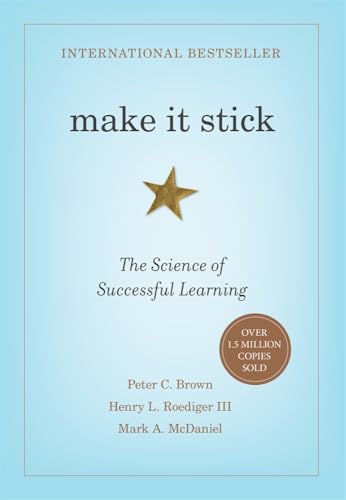
Make It Stick: The Science of Successful Learning
The gold standard for cognitive science learning. Learn how active recall, spaced repetition, retrieval practice, and varied study schedules dramatically improve retention over passive re-reading.
AI Study Pilot receives a small commission from qualifying Amazon purchases at no extra cost to you.Common mistakes
* Letting the AI summarize instead of quizzing: If the AI starts explaining the whole chapter, copy-paste your initial boundary rules prompt to reset the Socratic interaction.
* Peeking at your study notes: To get the cognitive benefits of active recall, write your answer to the AI's question before checking your slides.
* Assuming the AI grading is infallible: If the AI tells you an answer is correct but your textbook says otherwise, trust your textbook. Always verify critical facts.
Disclosure: AI Study Pilot may add affiliate links later. We recommend free-first tools where possible and never promise guaranteed grades or outcomes.