Academic writing · Updated May 2026
How to Balance AI Feedback With Your Own Writing Voice
Avoid 'AI writing' styles. Learn how to combine AI structural feedback with your unique human tone, vocabulary, and authentic perspectives.

Using large language models like Claude or ChatGPT to review your essays can be a great way to improve your writing. An AI editor can spot logical gaps, suggest stronger vocabulary, check your transitions, and flag spelling errors.
However, letting the AI write the essay for you, or copying and pasting AI-written paragraphs, is a high-risk action. It leads to academic integrity violations and strips your writing of its most valuable element: your authentic human voice. The key is to treat AI as a structural writing coach that helps you refine your draft, rather than a writer that replaces it.
Quick guide to voice balancing
- Draft manually first: Write the initial essay yourself, using your own words, vocabulary, and stories.
- Review structure, not text: Ask the AI to audit your logic and outline strength, not rewrite sentences.
- Audit AI suggestions: If the AI suggests vocabulary, only adopt words you would normally use in class.
- Compare drafts: Check your revised version against your original to confirm it still sounds like you.
- Verify citations: AI tools can hallucinate quotes and source links. Never add a citation you have not verified manually.
Academic efficiency and study strategy
Learning to write efficiently is a key skill for top college performance. Top students do not rely on shortcuts to generate text; they build systematic workflows to manage their research, organize their time, and outline their thoughts. Reading guides on strategic study habits, such as Cal Newport's bestseller How to Become a Straight-A Student, can help you build structured study blocks that give you plenty of time to draft papers manually.
Step 1 — Write the first draft on your own
Opening an AI editor before you have written a single sentence invites passive reliance. Spend time outlining your thesis, drafting paragraphs, and choosing your arguments manually. Your first draft can be messy and contain typos—that is exactly what the AI will help you edit.
Step 2 — Ask the AI for a structural audit
Instead of asking the AI to "improve" or "write" a paragraph, ask it to analyze your structure.
Act like an essay editor. Do not rewrite my text. Read my draft below and identify:
1. Are there any paragraphs where the logic is weak or unsupported?
2. Are my transitions between paragraphs smooth or jarring?
3. Where do I need to add more evidence or explanation?

My draft:
[paste your draft]
This keeps the writing entirely yours while giving you an objective critique of your arguments.
Step 3 — Request vocabulary suggestions, not sentence rewrites
If a paragraph feels repetitive, do not let the AI rewrite it. Instead, ask for a list of synonyms.
Here is a paragraph I wrote: "[paste paragraph]". I feel like I am repeating the word [word] too much. What are 5 alternative terms or phrases I could use in this context?Select the synonym that matches your normal speaking and writing style. If you have to look up a word's definition to use it, it probably doesn't fit your voice.
Step 4 — Check for "AI Writing" clichés
AI models tend to use specific patterns, sentence lengths, and transition phrases (like "In conclusion," "It is crucial to note," "Furthermore," "Indeed," or "Delve into").
Review your edits and remove these common indicators. Read your essay aloud. If a sentence sounds too formal, stiff, or robotic, rewrite it in your own words.
Step 5 — Run a voice comparison check
Before submitting your paper, paste a paragraph of your original draft and a paragraph of your final draft into the AI to compare the voice.
Compare these two paragraphs.
Paragraph A (Original): [paste original]
Paragraph B (Final): [paste final]

Is the authentic voice, tone, and vocabulary in Paragraph B consistent with Paragraph A? Highlight any sections in Paragraph B that sound too formal, robotic, or disconnected from my original voice.
This ensures you remain in complete control of the final output.
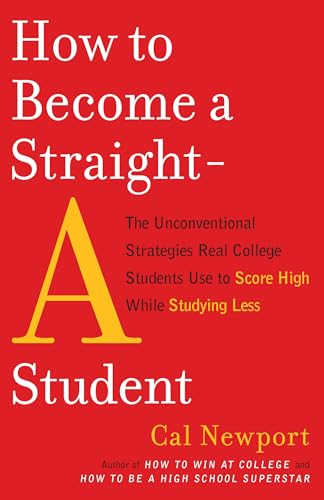
How to Become a Straight-A Student
A strategic study blueprint designed specifically for college students. Demystifies top performance and shows how to prepare for exams efficiently without cramming.
AI Study Pilot receives a small commission from qualifying Amazon purchases at no extra cost to you.Disclosure: AI Study Pilot may add affiliate links later. We recommend free-first tools where possible and never promise guaranteed grades or outcomes.