Claude for students · Updated May 2026
How to Use Claude for Academic Writing: A Safe Feedback Guide
Learn how to use Claude to strengthen your outlines, test your thesis, and get structural drafting feedback while maintaining your own voice and meeting course rules.
Use Claude as an interactive writing coach for outline development, thesis critiques, and structural revision while keeping your own writing voice first.
Academic writing requires original thinking, research synthesis, and individual voice. While tools like Anthropic's Claude are exceptionally skilled at understanding language, they are most effective when treated as a structural editor and sounding board rather than an automated content writer.
Using Claude to draft your paragraphs is a high-risk action that often triggers policy violations and results in passive, generic arguments. However, using Claude to challenge your reasoning, audit your evidence, and critique your outlines is a powerful way to improve your writing skills safely.
Quick answer
- Read your course AI policy and essay instructions carefully before starting.
- Draft your own thesis statement and outline before opening Claude.
- Ask Claude for structural feedback, counterarguments, and citation checks on your draft.
- Never ask Claude to write, rewrite, or finish a paragraph that you plan to submit.
- Record your prompts and the AI's structural critiques in a short AI-use log.
Helpful sources behind this workflow
- Purdue OWL: Writing a Thesis Statement
- Harvard College Writing Center: Strategies for Essay Writing
- University of Maryland Global Campus: High-Integrity Essay Revision
Safe vs risky essay-feedback prompts
Before you submit any prompt to Claude, make sure it aims for structural feedback and learning support, not automated text generation.
- Target task: Thesis Strength · Risky prompt (Bypasses thinking): Write a strong thesis statement for my essay on renewable energy. · Safer prompt (Interactive coaching): Critiques my thesis statement for specificity and suggest three counterarguments.
- Target task: Outline Organization · Risky prompt (Bypasses thinking): Create a complete outline for a 5-page literature review. · Safer prompt (Interactive coaching): Review my draft outline and point out any logical gaps or transition issues.
- Target task: Evidence Audit · Risky prompt (Bypasses thinking): Find three sources that support my claim about active recall. · Safer prompt (Interactive coaching): Check my paragraph analysis and tell me where my claims need more specific evidence.
- Target task: Revision Help · Risky prompt (Bypasses thinking): Rewrite this paragraph to sound more professional and academic. · Safer prompt (Interactive coaching): Point out three sentences in this paragraph that are passive or unclear, and explain why.
Step 1 — Challenge your thesis statement
A strong academic essay requires a specific, arguable thesis statement. Claude is excellent at roleplaying as an academic reviewer to test the limits of your claim.
You are an academic reviewer auditing my thesis statement. Challenge my claim and suggest three logical counterarguments that a skeptic would make. Do not write a new thesis for me.

My draft thesis statement:
[paste your draft thesis here]
Reviewing counterarguments helps you strengthen your main body paragraphs and prepare for potential objections before your instructor reads your draft.
Step 2 — Audit your essay outline
A well-structured outline ensures your arguments flow logically. Ask Claude to act as a structural editor to check your transitions and section headers.
Review my draft essay outline. Identify:
1. Any sections where the logical flow is weak or disjointed.
2. Headings that do not connect back to my core thesis statement.
3. Places where a reader might get confused by the order of arguments.

My thesis statement:
[paste thesis]

My draft outline:
[paste outline]
This structural audit ensures you don't spend hours writing paragraphs for a disjointed outline that will require major structural changes later.
Step 3 — Analyze paragraph structure and clarity
When you finish a rough draft, use Claude to check for clarity, passive voice, and weak evidence connections.
Read my paragraph draft below. Do not rewrite any of the text. Point out:
1. Two sentences that are wordy or overly complex.
2. Any claims that lack clear supporting reasoning or context.
3. Places where I have used passive voice.
Explain why each point is a concern so I can revise them myself.

My paragraph draft:
[paste one or two paragraphs]
This method aligns perfectly with our guides on AI Essay Feedback Without Cheating and ChatGPT Study Mode for Students, keeping the writing and learning completely student-owned.
Step 4 — Acknowledge and log your AI assistance
Many instructors ask students to disclose whether and how they used artificial intelligence during the writing process. Keep a simple, professional AI-use log to document your integrity.
- Tool used: Claude 3.5 Sonnet
- Purpose: Structural outline feedback and thesis statement critique.
- Prompts used: Outline critique prompt, counterargument check prompt.
- Wording adopted: Zero AI-generated text was copied. 100% of the essay wording, citations, and arguments are my own original drafts.
Common writing mistakes to avoid
- Mistake 1: Let AI write your hook or conclusion: AI hooks are often cliché ("Since the dawn of time...") and conclusions are repetitive. Write your own to preserve your unique voice.
- Mistake 2: Failing to check AI-suggested sources: AI tools can occasionally hallucinate source citations. Never cite a paper or link that you have not personally verified.
- Mistake 3: Blindly accepting all structural revisions: If Claude critiques an outline section but you believe the order makes sense for your specific argument, trust your own reasoning first.
Using Claude as a writing coach keeps you active, focused, and secure in your academic compliance.
Disclosure: AI Study Pilot may add affiliate links later. We recommend free-first tools where possible and never promise guaranteed grades or outcomes.
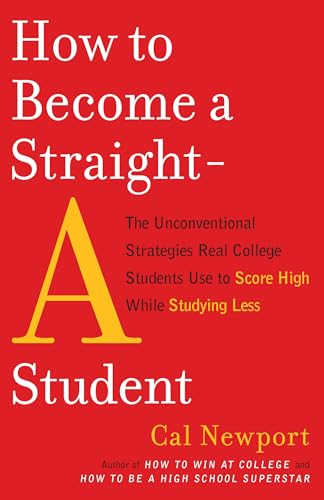
How to Become a Straight-A Student
A strategic study blueprint designed specifically for college students. Demystifies top performance and shows how to prepare for exams efficiently without cramming.
AI Study Pilot receives a small commission from qualifying Amazon purchases at no extra cost to you.